The Gap
Here’s a short tutorial on a story concept McKee calls “The Gap”, and how it fits with the Binary Core Values in the Christian story.
“The story lies in the gap between expectation and reality.”
Robert McKee @McKeeStory, May 18 2016
What is the Gap?
It is not a gap between what a character wants and what a character expects to happen. It’s the gap between what a character does at a specific moment in life in an effort to achieve what they want. And they take an action expecting that this action will cause a helpful enabling positive reaction in their world. But a gap opens up when the world reacts more powerfully than they expected, reacts differently than they expected and the world certainly does not cooperate with them. The world in fact is antagonistic and thwarts or blocks their desire for what they want. So it’s a gap between action and result, between what a character expects to happen when they take an action and what really does when they do. That is the gap that we’re talking about.
Robert McKee’s Storylogue Q&A: Opening Up The Gap Between Expectation and Result
And this concept is fundamental to what makes a story compelling…
The substance of story is the gap that splits open between what a human being expects to happen when he takes an action and what really does happen; the rift between expectation and result, probability and necessity.
All great storytellers since the dawn of time—from the ancient Greeks through Shakespeare and up to the present day—have dealt with this fundamental conflict between subjective expectation and cruel reality.
We humans commonly experience a gap related to the core value in the Christian story of loyal love/betrayal. For people take actions which are verbal or physical, which then create expectations for loyal love from another person or persons, and… what you get instead is some form of betrayal.
And the greater the expectations for love and loyalty, the worse the pain.
It may be the nastiest experience of the gap.
Consider this selection of quotes…
“I could never hurt him enough to make his betrayal stop hurting. And it hurts, in every part of my body.”
“….I came to consider betrayal a moral violation of another’s humanity—akin to torture.”
“Stab the body and it heals, but injure the heart and the wound lasts a lifetime.”
Mineko Iwasaki
And though betrayal may be commonplace, no matter how often we experience betrayal, it never loses its sting.
“There is no curse in Elvish, Entish, or the tongues of Men for this treachery.”
And most (all?) of us have experienced in one form or another these painful betrayals…
“Everyone suffers at least one bad betrayal in their lifetime. It’s what unites us.”
In the Christian story, there’s an interesting story of the head guy of Jesus’ disciples named Peter. He famously betrayed Jesus by denying him just before the crucifixion. Let’s ponder this interesting perspective on this incident…
Betrayal, for example, is part of the personal story of everyone. Have we not all at some time in our life betrayed others, and have we not all known what it is to be betrayed, and does not the memory of these moments leave continuing scars on our psyche? Reading, then, the account of Saint Peter’s betrayal of Christ and of his restoration after the Resurrection, we can see ourselves as each an actor in the story. Imagining what both Peter and Jesus must have experienced at the moment immediately after the betrayal, we enter into their feelings and make them our own. I am Peter; in this situation can I also be Christ? Reflecting likewise on the process of reconciliation—seeing how the risen Christ with a love utterly devoid of sentimentality restored the fallen Peter to fellowship, seeing how Peter on his side had the courage to accept this restoration—we ask ourselves: How Christlike am I to those who have betrayed me? And, after my own acts of betrayal, am I able to accept the forgiveness of others—am I able to forgive myself?
And to help you see in a deeper way how stories of loyal love/betrayal are compelling, consider the following from Robert McKee…
You emphatically do not want to tell a beginning-to-end tale describing how results meet expectations. This is boring and banal. Instead, you want to display the struggle between expectation and reality in all its nastiness.
Stories about loyal love/betrayal are certainly not stories “describing how results meet expectations”! No “boring and banal” in the Christian story. Instead, feel the “struggle” “in all its nastiness”…
We humans are sure prone to the betrayal end of this binary core value. And when it happens, as it often does, it’s so painful…
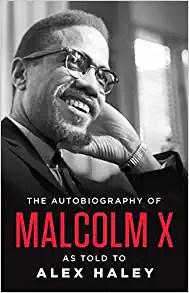
The death talk was not my fear. Every second of my twelve years with Mr. Muhammad, I was ready to lay down my life for him. The thing to me worse than death was betrayal. I could conceive death. I couldn’t conceive betrayal….
And remember, Malcolm X’s death came through betrayal.
So, these tales are compelling because they touch us at a deep emotional level…
Our appetite for story is a reflection of the profound human need to grasp the patterns of living, not merely as an intellectual exercise, but within a very personal, emotional experience.

“The worst pain in the world goes beyond the physical. Even further beyond any other emotional pain one can feel. It is the betrayal of a friend.”
We humans also know how the loyal love/betrayal gap involves conflict. And as McKee explains, you can’t have a compelling story without conflict…
When the protagonist steps out of the inciting incident, he moves into a world governed by the Law of Conflict. To wit: Nothing moves forward in a story except through conflict.
“Why shouldn’t I hate her? She did the worst thing to me that anyone can do to anyone else. Let them believe that they’re loved and wanted and then show them that it’s all a sham.”
And keep in mind — the betrayal gap is so painful because love and loyalty are so astonishingly wonderful and powerful.
There is something going on there. It is so very much a part of our experience as human beings.
Consider also McKee’s insight about how conflict has to move forward against powerful forces of antagonism…
THE PRINCIPLE OF ANTAGONISM: A protagonist and his story can only be as intellectually fascinating and emotionally compelling as the forces of antagonism make them.
The more powerful and complex the forces of antagonism opposing the character, the more completely realized character and story must become.
And these forces of antagonism often show up in the form of betrayal….
“For Brutus, as you know, was Caesar’s angel:
Judge, O you gods, how dearly Caesar loved him!
This was the most unkindest cut of all”
“Betrayal isn’t ridiculous. It’s the reason empires fall.”
And we all know, in the old days at least, the price to be paid for treason was death!
Look at this quote we found from way back in the 1880’s:
Thus, when a theft is punished with a year’s imprisonment, and a murder with the loss of life, it is plainly taught that to take life is a more flagrant outrage than to take property, while both are stamped as evil. In like manner, where the issue is so broad as to involve not merely the rights of an individual, but those of the whole community, and the authority and existence of the government itself, the crime is visited with the highest penalty which the lawgiver can inflict. Hence, in all lands treason has been punishable with death — a fact which taught the people that the preservation of rightful civil government was fundamental to all interests, and that no one could be allowed to attack it but at his greatest peril. This fact has a bearing on the proper penalty of the divine law. It would seem to indicate that so far forth as sin is committed against clear light, and implies settled purpose of antagonism to divine authority, it is simply treason against the government of God, and deserves therefore the highest form of punishment.The Nature And Object Of Penalty, William W. Patton – BSAC 038:150 (Apr 1881)
Betrayal is the most despicable of vices…
For Dante, betrayal is the most despicable of vices. The Inferno takes us down through the levels of hell, each more excruciating and dire than the one before. After running a gantlet of mud, mire, scorching winds, blazing hellfire agonies, and rivers of blood, we arrive at the ninth circle, where the worst torments are to be found. That lowest level of hell is reserved for the lowest sort of sinners-the disloyal traitors to family, traitors to country, traitors to one’s guests and friends, each worse than the last. And there, nearly at the bottom, encased entirely in ice, are those who, like Judas, betrayed their benefactors. Finally, at the very center of hell is Satan himself, three-headed and putting his razor-sharp teeth to work perpetually gnawing at the three poster boys of betrayal, Brutus, Cassius, and Judas.

