Wow! This has been quite a journey to arrive here, at the last of the stages in evaluating the Christian story. Will the Christian story disappoint on this most important final stage?
Let’s find out. Here is McKee on the last of the Eight Stages of Story…

At climax, the story’s final event changes the core value’s charge absolutely and the character’s life returns to balance.
When evaluating the Christian story, there is so much to consider. While our inciting incident (Stage 3)and first action (Stage 5) were pretty straightforward, there are a lot of stories in the bible, a lot of pages between that and our crisis (Stage 7).
If it does all tie together, to paraphrase McKee –Because of the Inciting Incident, the Climax had to happen.
We have approached the Christian story as a long-form story, so we should find a climax in the grand story in the bible, right?
Since story is essentially about change…
What is a story, precisely? The essential core event in all stories ever told in the history of humanity can be expressed in just three words: Conflict changes life. Therefore, the prime definition becomes: a dynamic escalation of conflict-driven events that cause meaningful change in a character’s life.
And as Robert McKee explains, climax is about change…
“Climactic” doesn’t mean short and explosive; it means profound change.
Okay, let’s step through these again, and get a mental list in our heads of what we’re looking for–
For one…We’re looking for a climax that brings about profound change.
For another, it’s not just change… that change must be meaningful…
A story is not an accumulation of information strung into a narrative, but a design of events to carry us to a meaningful climax.
For yet another, repeating from above…the climax must change the core value’s charge absolutely…
At climax, the story’s final event changes the core value’s charge absolutely and the character’s life returns to balance.
And finally…the story’s final choice, and final action flowing from that choice, must satisfy the protagonist with a restored balance...
At climax, the protagonist’s final choice of action causes the reaction she hoped for. She gets what she wants and needs as her world delivers her object of desire and restores her life to an even more perfect balance than when the story began. The story achieves closure – all questions answered, all emotion satisfied.
Also part of Stage 8 is Integration, or resolution. Here’s what Shawn Coyne writes…
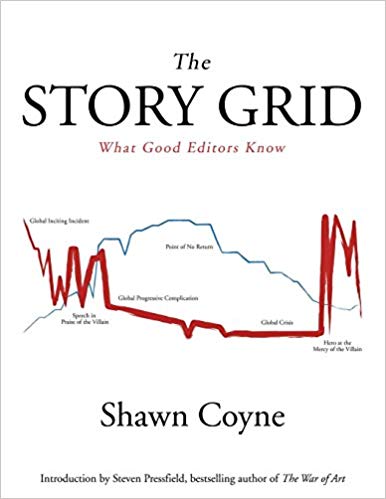
Lastly, there is INTEGRATION, which I would call the very end of a Story — INTEGRATION dramatizes resolution. We’ve found a new stability, one that is vastly different than where we began. We’ve got a whole new outlook on life and we’re not the same person we once were. At INTEGRATION, we have come full circle and have recovered from the SHOCK of a big Inciting Incident in our life, no matter what, by the end of the Story we will never go back to where or who we were before.
…See that? It’s still about change.
So, back to this core idea of Robert McKee — Because of the Inciting Incident, the Climax had to happen, consider this from McKeestory.com
The Last Act Climax
Of all the turning points you will experience in your quest as a writer, one stands out on the road map toward true meaning: the Climax.
Without your Climax, you have no story.
In Aristotle’s words, an ending must be both “Inevitable and unexpected.” Unexpected in the sense that as your Inciting Incident occurred, anything and everything as a writer seemed possible. Inevitable in that at Climax, as you look back through your journey, it should seem that the route you chose was the only path.
It need not be full of noise and violence,
rather, it should be full of meaning.
…there it is again, the climax must be full of meaning.
To put it in cosmic terms in our archplot story, in Climax, we’re looking for a rearrangement of our story’s universe…
The impact of the Inciting Incident creates our opportunity to reach the limits of life. It’s a kind of explosion. …. Out of this upheaval, you must find, at Climax, a resolution, for better or worse, that rearranges this universe into a new order.
Okay, that’s a tall order! Ready to jump in and see how the Christian story fills or doesn’t fill this robust list?
Two Climaxes?
As I mentioned before, there’s a lot of pages between Stage 5 and Stage 7 in the meta story in the bible. So I’m playing with some idea to explore options for the Christian story’s climax.
One is that there could be more than one climax. Is that possible in a good story?
Yes it is. Notice how Robert McKee talks about the possibility of two or more different climaxes in a story…
A story is a series of acts that build to a last act climax or story climax which brings about absolute and irreversible change.
So, though the Bible has many stories within it, could it contain more than one climax?
Yes. It appears that in long form story there are scenes, sequences, and acts.
Here’s McKee showing that there will be multiple climaxes at each of these stages…
A Sequence Climax is a scene that causes a moderate reversal–change with more impact than a scene. An Act Climax is a scene that causes a major reversal–change with greater impact than a Sequence Climax.
…you get the idea.
So, the Christian God seems to be doing something which fits with a longer form story…
The Bible is in the end a single, great story that comes to a climax in Jesus Christ.
As Shawn Coyne explains, there is a tight tie between the Crisis (Stage 7) and the Climax (here in Stage 8)…
A climax is the active answer to the question raised by a crisis.
It’s the choice the character makes between the best bad one or between irreconcilable goods. This is the big reveal of character. Not who he says he is, but who he really is.
What is the revealer of who Jesus “really is”, the active answer to the question at the Crisis in the Christian story– “…not my will, but Thy will”–
What is God’s will for Jesus?
This crisis decision/choice appears to be answered by the hero Jesus, climaxing like this…
The climax of the biblical story occurs at Jesus’ death, resurrection and exaltation as king.
STR: Why is the “kingdom of God” a vital concept to understand Jesus’ cross?
Treat: …. First, the unfolding story of God’s reign coming on earth as it is in heaven provides more than mere background for the cross; it is the story for which the cross is the climax.
And here is something else from Coyne to consider for a successful story climax…
Also it’s important to remember that when the protagonist makes a choice and acts on that choice, that climax must be on stage. That is, it has to happen on the page or on the screen, not in some previous scene or moment that another character reports. To rob the reader or viewer of the crucial moment of truth for a protagonist will devastate them. It will make them so angry that they will probably never read anything you write ever again. You’ve promised them page after page that you are going to give them a great scene where the protagonist faces an impossible choice. You’ve got to deliver it. Seriously.
Another question to add to our list–Does the Christian story climax happen on stage?
Okay, let’s set out to try and answer all these questions we’ve raised…
I propose the Christian story has a two part climax in this movement, and the first part of our climax is certainly on stage. It begins with…
1. The Revealing Trial and Crucifixion
The Trial
Here are links to passages related to this part of the stage…
Here’s something interesting about the trial…
It is striking to note that the trial of Christ before Pilate was in seven stages. This is seen by noting carefully the following scriptures, which speak of the Governor passing in and out of the judgment-hall. The first stage was on the outside: 18:28-32. The second on the inside: 18:33-37. Third, on the outside: 18:38-40. Fourth, inside: 19:1-3. Fifth, outside: 19:4-7. Sixth, inside: 19:8-11. Seventh, outside: 19:12-16.
And after the trial it continues on stage, with…
The Crucifixion
Here are the passages putting the crucifixion on stage …
This shows how the crucifixion is on stage…
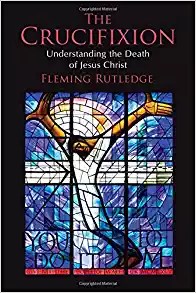
There have been many famous deaths in world history; we might think of John F. Kennedy, or Marie Antoinette, or Cleopatra, but we do not refer to “the assassination,” “the guillotining,” or “the poisoning.” Such references would be incomprehensible. The use of the term “the crucifixion” for the execution of Jesus shows that it still retains a privileged status. When we speak of “the crucifixion,” even in this secular age, many people will know what is meant. There is something in the strange death of the man identified as Son of God that continues to command special attention. This death, this execution, above and beyond all others, continues to have universal reverberations. Of no other death in human history can this be said. The cross of Jesus stands alone in this regard. … There were many thousands of crucifixions in Roman times, but only the crucifixion of Jesus is remembered as having any significance at all, let alone world-transforming significance.
And notice how what McKee says about setup fits with the crucifixion…

The key to creating a scene of minimum dialogue and maximum impact is its setup.
To the point of maximum impact…
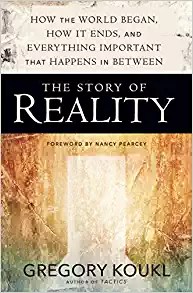
Crucifixion is a cruel form of execution. It is generally reserved for slaves and rebels. The victim is often brutally flogged, then stripped naked and fastened to the beams with square, wrought-iron nails. They are driven through the front of each wrist into the patibulum crossbeam, severing the median nerve, causing searing pain. The feet are stacked one upon the other against the vertical staticulum, and a spike is hammered through both arches. There the criminal hangs, exposed to the elements and to the scorn and ridicule hurled at him by soldiers and mocking bystanders.
Death is agonizing and slow, the result of shock, exposure, and, eventually asphyxiation. To ease the pain in the feet, the victim hangs from the nails in his wrists. But hanging from the cross constricts the diaphragm, hindering breathing. The only way to exhale and get another breath is to pull against the nails in the wrists and push down with the legs, driving the victim’s full weight against the spikes piercing his arches, and causing his scourged flesh, hanging in ribbons from his back, to scrape against the ragged timber. The agonizing effort could go on for days. When exhaustion eventually overtakes the victim, he suffocates. Broken legs mercifully hasten death.
Here’s a passage out of the book of Psalms which seems to fit with The Hero’s Journey Setup, in a way which ties these climaxes together into the long form of the story…
My God, my God, why have you forsaken me?
Why are you so far from saving me, from the words of my groaning?
O my God, I cry by day, but you do not answer,
and by night, but I find no rest.Yet you are holy,
enthroned on the praises of Israel.
In you our fathers trusted;
they trusted, and you delivered them.
To you they cried and were rescued;
in you they trusted and were not put to shame.But I am a worm and not a man,
scorned by mankind and despised by the people.
All who see me mock me;
they make mouths at me; they wag their heads;
“He trusts in the Lord; let him deliver him;
let him rescue him, for he delights in him!”Yet you are he who took me from the womb;
you made me trust you at my mother’s breasts.
On you was I cast from my birth,
and from my mother’s womb you have been my God.
Be not far from me,
for trouble is near,
and there is none to help.Many bulls encompass me;
strong bulls of Bashan surround me;
they open wide their mouths at me,
like a ravening and roaring lion.I am poured out like water,
and all my bones are out of joint;
my heart is like wax;
it is melted within my breast;
my strength is dried up like a potsherd,
and my tongue sticks to my jaws;
you lay me in the dust of death.For dogs encompass me;
a company of evildoers encircles me;
they have pierced my hands and feet—
I can count all my bones—
they stare and gloat over me;
they divide my garments among them,
and for my clothing they cast lots.But you, O Lord, do not be far off!
O you my help, come quickly to my aid!
Deliver my soul from the sword,
my precious life from the power of the dog!
Save me from the mouth of the lion!
You have rescued me from the horns of the wild oxen!I will tell of your name to my brothers;
in the midst of the congregation I will praise you:
You who fear the Lord, praise him!
All you offspring of Jacob, glorify him,
and stand in awe of him, all you offspring of Israel!
For he has not despised or abhorred
the affliction of the afflicted,
and he has not hidden his face from him,
but has heard, when he cried to him.From you comes my praise in the great congregation;
my vows I will perform before those who fear him.
The afflicted shall eat and be satisfied;
those who seek him shall praise the Lord!
May your hearts live forever!All the ends of the earth shall remember
and turn to the Lord,
and all the families of the nations
shall worship before you.
For kingship belongs to the Lord,
and he rules over the nations.All the prosperous of the earth eat and worship;
before him shall bow all who go down to the dust,
even the one who could not keep himself alive.
Posterity shall serve him;
it shall be told of the Lord to the coming generation;
they shall come and proclaim his righteousness to a people yet unborn,
that he has done it.
And the last line …
“that he has done it”
It looks like it connects to the famous loyal love passage which some Christians and I believe may be the controlling idea in the Christian story …
For God so loved the world, that he gave his only Son, that whoever believes in him should not perish but have eternal life. For God did not send his Son into the world to condemn the world, but in order that the world might be saved through him.
So here’s an interesting question for someone like me that’s in over my head here–
How did Jesus save them by choosing to let himself be crucified?
I found this helpful…
In the darkness that shrouds Calvary from the sixth to the ninth hour, a divine transaction is taking place. Jesus makes a trade with the Father. Punishment adequate for all the crimes of all of humanity – every murder, every theft, every lustful glance, every hidden act of vice, every modest moment of pride, every monstrous deed of evil-punishment adequate for every crime of every man or woman who ever lived, Jesus takes upon himself as if he is guilty of all.
In the end, the cross does not prevail. Arguably, Jesus does not die of exposure, or loss of blood, or asphyxiation. Rather, when the full payment is made, when the last of the debt of those who trust in him melts away, when the justice of God is fully satisfied, Jesus simply dismisses his spirit into the Father’s hands and dies. But before he does, a single word falls from his lips. It is the word retelestai.
Jesus’ solitary word requires three English words to translate: “It is finished.” Do not misunderstand, however. Jesus is not collapsing in exhausted relief at the end of suffering. The ordeal is done, true enough, but the Son of God rejoices not in what is over. He celebrates, rather, what has been accomplished. His words, precisely rendered, mean, “It has been and will forever remain finished.” Christ’s torment has not simply ended. His goal has been reached; his task has been achieved. The divine transaction is complete. Jesus takes our guilt. We take his goodness. That is the trade. And its effect extends forward, continues on, and changes the world forever.
Such great language related to Stage 8 of story there–“forever finished”, “goal …reached”, “task…achieved”, that “changes the world forever”.
I know I leaned heavily on this Moser guy in Stage 7. Well, here he is in Stage 8 on the crucifixion…
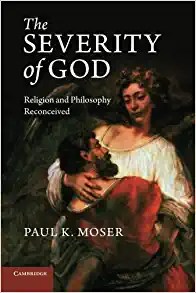
Jesus Christ’s death on the cross, commanded of him by God (Rom. 3:25; 1 Cor. 5:7; Phil. 2:8; cf. Mark 14:23-24), aims to manifest how far he and God will go to offer salvation to humans. By divine plan, Jesus gives humans all he has, from God’s self-giving love, to manifest that God mercifully and righteously loves humans to the fullest. Jesus thereby offers humans salvation as the gift of unearned forgiveness, companionship, and membership in God’s family via reception of God’s Spirit (see Rom. 5:8; cf. John 3:16-17). This is the heart of the Good News of divine salvation for humans that Paul announced in the first century, to philosophers and others.
I love how he ties together our protagonist, showing how Jesus the son and God the Father are working together to reconcile the relationship with humans.
And here’s a big picture look at the impact of the crucifixion…
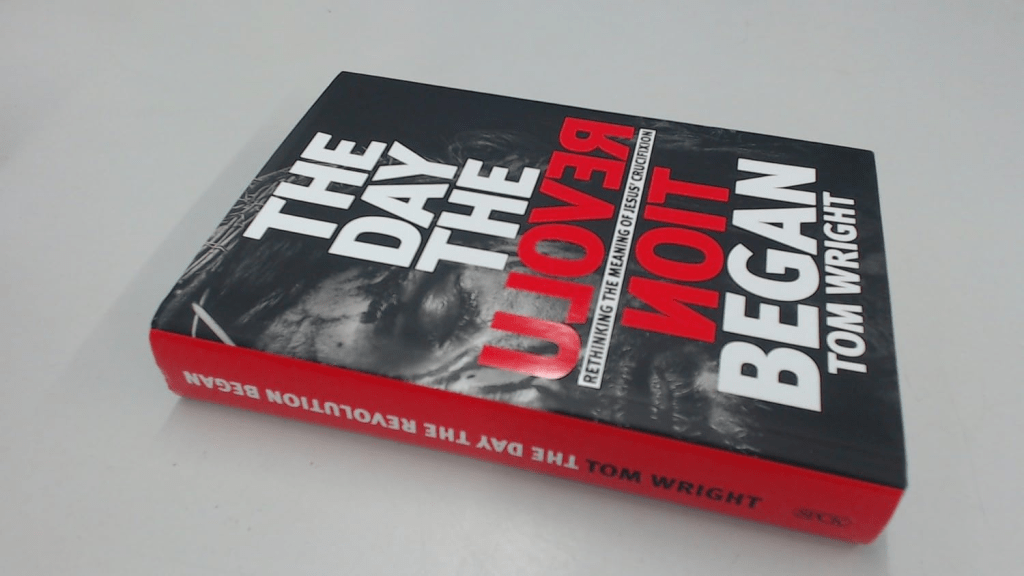
“YOUNG HERO WINS HEARTS.” Had there been newspapers in Jerusalem in the year we now call AD 33, this was the headline you would not have seen. When Jesus of Nazareth died the horrible death of crucifixion at the hands of the Roman army, nobody thought him a hero. Nobody was saying, as they hurriedly laid his body in a tomb, that his death had been a splendid victory, a heroic martyrdom. His movement, which had in any case been something of a ragtag group of followers, was over. Nothing had changed. Another young leader had been brutally liquidated. This was the sort of thing that Rome did best. Caesar was on his throne. Death, as usual, had the last word.
Except that in this case it didn’t. As Jesus’s followers looked back on that day in the light of what happened soon afterward, they came up with the shocking, scandalous, nonsensical claim that his death had launched a revolution. That something had happened that afternoon that had changed the world. That by six o’clock on that dark Friday evening the world was a different place.
Nonsensical or not, they were proven right. Whether we believe in Jesus, whether we approve of his teaching, let alone whether we like the look of the movement that still claims to follow him, we are bound to see his crucifixion as one of the pivotal moments in human history. Like the assassination of Julius Caesar around seventy years earlier, it marks the end of one era and the start of another.
And Jesus’s first followers saw it as something more. They saw it as the vital moment not just in human history, but in the entire story of God and the world. Indeed, they believed it had opened a new and shocking window onto the meaning of the word “God” itself. They believed that with this event the one true God had suddenly and dramatically put into operation his plan for the rescue of the world.
N.T. Wright, The Day the Revolution Began: Reconsidering the Meaning of Jesus’s Crucifixion
…certainly shows a climax with maximum impact.
2. The Resurrection
But now we move onto something of equal impact, as the two can hardly be separated. Here’s Moser again, stating plainly how the final climatic action fulfills God’s object of desire…
The central New Testament message portrays divine grace as culminating in the self-sacrificial life, death, and resurrection of Jesus Christ, in keeping with God’s will for human redemption.
Here’s a nice synopsis…
I hope when you read the Bible that you are aware that it is a single great enormous story, a great epic running from that original creation in the garden to the final New Creation when God brings earth and heaven together finally and forever — with the climax of that story being Jesus dying on the cross and rising again as we were just singing. And then the work of implementing that achievement being given to us.
The Bible and Christian Imagination, N.T. Wright, Response, Summer 2005
So, here are links to the story of the resurrection from the four gospels …
If you looked up the passages, you would see how everyone’s surprised at the resurrection. Which is important to a compelling story’s end…
Aristotle said a play’s ending must be both “inevitable and unexpected.’’ Similarly, screenwriter William Goldman declared that the key to all story endings is to give the audience what it wants, but not in the way it expects.
And that is all so on stage.
The Binary Core Value and the Two Part Climax
Here’s a fascinating passage from the book of the prophet Jeremiah about God’s relationship with Israel. It looks like he is promising them an amazing future.
Making this passage look a lot like a loyal love setup promise…
“Behold, the days are coming, declares the Lord, when I will make a new covenant with the house of Israel and the house of Judah, not like the covenant that I made with their fathers on the day when I took them by the hand to bring them out of the land of Egypt, my covenant that they broke, though I was their husband, declares the Lord. For this is the covenant that I will make with the house of Israel after those days, declares the Lord: I will put my law within them, and I will write it on their hearts. And I will be their God, and they shall be my people. And no longer shall each one teach his neighbor and each his brother, saying, ‘Know the Lord,’ for they shall all know me, from the least of them to the greatest, declares the Lord. For I will forgive their iniquity, and I will remember their sin no more.”
Thus says the Lord, who gives the sun for light by day and the fixed order of the moon and the stars for light by night, who stirs up the sea so that its waves roar— the Lord of hosts is his name:
“If this fixed order departs
from before me, declares the Lord,
then shall the offspring of Israel cease
from being a nation before me forever.”Thus says the Lord:
“If the heavens above can be measured,
and the foundations of the earth below can be explored,
then I will cast off all the offspring of Israel
for all that they have done,
declares the Lord.”
Note: No betrayal there.
But, when the Father sends his Son on the rescue mission, his own people betray him. Here’s what Stephen, one of the first deacons in the early church. said to the very Jews that experienced God’s faithfulness to them all those years…
“You stiff-necked people, uncircumcised in heart and ears, you always resist the Holy Spirit. As your fathers did, so do you. Which of the prophets did your fathers not persecute? And they killed those who announced beforehand the coming of the Righteous One, whom you have now betrayed and murdered, you who received the law as delivered by angels and did not keep it.”
Here’s the crowds response, mostly Jews among them, to Stephen’s speech…
Now when they heard these things they were enraged, and they ground their teeth at him. But he, full of the Holy Spirit, gazed into heaven and saw the glory of God, and Jesus standing at the right hand of God. And he said, “Behold, I see the heavens opened, and the Son of Man standing at the right hand of God.” But they cried out with a loud voice and stopped their ears and rushed together at him. Then they cast him out of the city and stoned him. And the witnesses laid down their garments at the feet of a young man named Saul. And as they were stoning Stephen, he called out, “Lord Jesus, receive my spirit.” And falling to his knees he cried out with a loud voice, “Lord, do not hold this sin against them.” And when he had said this, he fell asleep.
Did you see how Stephen asked God to forgive them, even as they were killing him?
Well, notice how that plea for them to be forgiven echoed this one from Jesus…
And when they came to the place that is called The Skull, there they crucified him, and the criminals, one on his right and one on his left. And Jesus said, “Father, forgive them, for they know not what they do.”
The decision which hangs in the air at the crisis moment is whether Jesus will do the loyal love thing and make the ultimate loyal love move…
Greater love has no one than this, that someone lay down his life for his friends.
And he did it.
This connects deeply to this fascinating insight from Robert McKee…
Here’s a simple test to apply to any story. Ask: What is the risk?
….
Life teaches that the measure of the value of any human desire is in direct proportion to the risk involved in its pursuit. The higher the value, the higher the risk. We give the ultimate values to those things that demand the ultimate risks — our freedom, our lives, our souls.
So, Jesus knew he would be betrayed, but he did it anyway.
Turning the Tables
The Gap is what McKee calls it…
The substance of story is the gap that splits open between what a human being expects to happen when he takes an action and what really does happen; the rift between expectation and result, probability and necessity.
And by another story guru, it’s called “A reversal”…
A reversal is a change by which the action veers round to its opposite.
–Aristotle, Poetics
I think the Christians in the following quotes seem to be talking about the same thing in what they call “turn the tables”, which our climax seems to be full of.
And according to the Christians, in story terms, the climactic action the Active Protagonist takes to restore the balance is also one which turns the tables on the betrayal in the inciting incident.
His going into Death was His final conflict with Satan for man, and on his behalf. By submitting to it He took away the power of Death; He disarmed Death by burying his shaft in His own Heart.
God warned Adam about death, but setting in motion a great shift in power, God raised Jesus from the dead…
In the closing pages of his best-seller People of the Lie, psychiatrist M. Scott Peck says there is the possibility in this world that perfect love can take evil up into itself and absorb it. Peck writes with almost prophetic power:
I can only say that there is a mysterious alchemy whereby the victim becomes the victor. As C.S. Lewis wrote: “When a willing victim who had committed no treachery was killed in a traitor’s stead, the Table would crack and Death itself would start working backwards.” I do not know how this occurs. But I know that it does. I know that good people can deliberately allow themselves to be pierced by the evil of others — to be broken thereby yet somehow not broken — to even be killed in some sense and yet still survive and not succumb. Whenever this happens there is a slight shift in the balance of power in the world (Peck 1983, 269).
What if it is God come into the world in the person of a human being who allows that to happen? It would be more than a slight shift in the balance of power — it would be a decisive shift, and the world is never the same. That is just what the early Christians believed. Every sermon in Acts celebrates the fact that God has raised Jesus from the dead. The world will never be the same again, for in that event the beginning of the end has arrived. There is no turning back.
New Testament Perspectives on Evil, Jerry R. Flora – ATJ 24:0 (NA 1992)
This really helped make clear to me what is going on with this “turning of the tables” that happened at the crucifixion…
Our vision of the manner in which God is redemptively at work in the world and in our life can be helpfully described by the idea of “salvific worldliness” as best seen and climaxed in the cross of Christ. The world of our experience takes in the shame, agony and seeming abandonment of God in the cross. We see evil openly at work producing its fruit of injustice and suffering in the One who hangs between two thieves. Yet, to faith is given a vision of the merciful Creator who turns the tables on the powers of evil to accomplish His saving purpose. Oddly, we notice, however, that He does not banish evil. Rather, He uses it to accomplish its own defeat. An incredible exchange is made. God places the world’s evil on the righteous Jesus, and His righteousness is imputed to us. A sham atonement for trumped-up sins becomes a real atonement for the sins of the world. Through the world’s greatest injustice, God justifies the world.
Justification: The Status of the Christian, Steven A. Hein – RAR 06:4 (Fall 1997)
Here’s another unique thought (to me anyway)…
During a British conference on comparative religions, experts from around the world debated what, if any, belief was unique to the Christian faith. They began eliminating possibilities. Incarnation? Other religions had different versions of gods’ appearing in human form. Resurrection? Again, other religions had accounts of return from death. The debate went on for some time until C. S. Lewis wandered into the room. “What’s the rumpus about?” he asked, and heard in reply that his colleagues were discussing Christianity’s unique contribution among world religions. Lewis responded, “Oh, that’s easy. It’s grace.”
After some discussion, the conferees had to agree. The notion of God’s love coming to us free of charge, no strings attached, seems to go against every instinct of humanity. The Buddhist eight-fold path, the Hindu doctrine of karma, the Jewish covenant, and the Muslim code of law — each of these offers a way to earn approval. Only Christianity dares to make God’s love unconditional.
Philip Yancey, What’s So Amazing About Grace?
Our climactic event of being raised from the dead is itself a turning the tables on Jesus’ enemies…
Judas violated Jesus, deceiving Him with the world’s greatest hypocritical kiss, resulting in Christ’s execution. However, in three days God turned the tables on Jesus’ enemies and raised Him from the dead. And the same God who raised the Lord Jesus out of seemingly utter, devastating treachery and defeat is still in the business of supporting and protecting us, even reversing our losses.
Judas, by George E. Meisinger, Chafer Theological Seminary Journal, CTSJ 03:1 (Summer 1997)
This from an old testament prophecy about Jesus, predicting the coming turning of the tables…
What then is the message of Isaiah 53? Recall the preceding context. In 49:4 the slave complained about working for nothing, and in 52:3 the Lord promised to redeem the slave without paying the rulers. In 53:10 the ruler looked for ransom to release the slave, but he Lord turned the tables on the rulers in vv. 11b-12b:
He acquits/acquitted an innocent, my servant, to the magnates, and their wrongs he endures/endured. Therefore I will have him share with the magnates and he shall share profit (שלל) with potentates under whom (תחת אשר) he exhausted himself to death and was counted with transgressors.
The slave exhausted himself under the great ones (magnates) who exercised power over him (compare “their great ones” in Mark 10:42), the masters of the slave. Not only will the rulers not receive any ransom, but also those masters must pay dividends to their slave for his labor!
Who’s Who and What’s What in Isaiah 53, Gordon D. Kirchhevel – BBR 13:1 (NA 2003)
This famous F.F. Bruce guy show how the way the story is told in the new testament features the turning of the tables…
But what is to be said of Christ’s making a “public exhibition” of the defeated powers? The verb δειγματίζω, or the compound παραδειγματίζω, could well have been used to describe what was done to Jesus Himself, when He was exposed to public humiliation on the cross. The compound is used in Hebrews 6:6 of the action of those who “crucify to themselves the Son of God afresh, and put him to an open shame” (KJV). The implication of Paul’s wording then may be that Jesus, by the victory of the Cross, turned the tables on His spiritual assailants; their powerlessness, not His, was publicly exposed.
Colossian Problems Part 4: Christ as Conqueror and Reconciler, F. F. Bruce – BSAC 141:564 (Oct 1984)
And as God then launched his disciples on the quest in the book of Acts, the strategy of turning the tables continued to be in play…
In Acts 4, Peter and John stood before the spiritual aristocracy of their nation after this “supreme court” had asked the two apostles how the lame man was healed (cf. Acts 3:1–11). In this most difficult situation, Peter was filled by the Spirit of God for the purpose of preaching mightily the Word of God. In a message reported in ninety-two words of Greek text, Peter “turned the tables” on the Sanhedrin and put them on trial, charging them with the murder of the Messiah and telling them that the nation’s salvation was to be found in the rejected Christ.
The Filling Of The Holy Spirit In The Book Of Acts, Norman W. Brown – CENQ 16:4 (Winter 1973)
More about the Sanhedrin having the tables turned on them…
By contrast with the Sanhedrin’s failure to speak about God, Peter and John identify the issue as being what God wants (v. 19). Thus the apostles turn the tables on the Sanhedrin by speaking truth to power: they have Peter and John on trial, but the apostolic κρίνατε (“you judge!”) puts the Sanhedrin on trial concerning their assessment of Jesus.
……
Paul’s Athens speech takes on a new light in responding to their question understood this way, for he declares that he is not introducing new gods, but one they already worship, albeit as “unknown” (v. 23). There was no requirement to acquire land for this god, for Israel’s God was the creator of all land (v. 24a)—indeed, this god did not live in hand-made temples (v. 24b), and so it was pointless to consider building a new temple for him. Paul thus undercuts the assumptions of the council, and denies that there is any need for further evidence for them to honour this god among their pantheon, for this god provides for all and does not need human attendants (v. 25). The quest for more gods to add to the statues in Athens was a mistake (v. 29).
Paul turns the tables on his interlocutors, for he asserts that the resurrection of Jesus—ironically—shows that the council, rather than making judgments about gods, faces judgment from the one true God through Jesus (vv. 30-31). Luke thus presents Paul as undermining his hearers’ world view and offering them a replacement world view drawn from Jewish monotheism re-understood in the light of Jesus’ resurrection.
The Climax Yet to Come
The turning of the tables helps show how the binary core value of loyal love/betrayal runs through the spine of the Christian story.
But, I discovered there is another climax coming, at the end of the current movement in the story…
Then I saw heaven opened, and behold, a white horse! The one sitting on it is called Faithful and True, and in righteousness he judges and makes war. His eyes are like a flame of fire, and on his head are many diadems, and he has a name written that no one knows but himself. He is clothed in a robe dipped in blood, and the name by which he is called is The Word of God. And the armies of heaven, arrayed in fine linen, white and pure, were following him on white horses. From his mouth comes a sharp sword with which to strike down the nations, and he will rule them with a rod of iron. He will tread the winepress of the fury of the wrath of God the Almighty. On his robe and on his thigh he has a name written, King of kings and Lord of lords.
Here’s an interesting question: Is the climax also connected to the story of Israel via this setup from the prophet Zechariah?
The oracle of the word of the Lord concerning Israel: Thus declares the Lord, who stretched out the heavens and founded the earth and formed the spirit of man within him:2 “Behold, I am about to make Jerusalem a cup of staggering to all the surrounding peoples. The siege of Jerusalem will also be against Judah. 3 On that day I will make Jerusalem a heavy stone for all the peoples. All who lift it will surely hurt themselves. And all the nations of the earth will gather against it. 4 On that day, declares the Lord, I will strike every horse with panic, and its rider with madness. But for the sake of the house of Judah I will keep my eyes open, when I strike every horse of the peoples with blindness. 5 Then the clans of Judah shall say to themselves, ‘The inhabitants of Jerusalem have strength through the Lord of hosts, their God.’
6 “On that day I will make the clans of Judah like a blazing pot in the midst of wood, like a flaming torch among sheaves. And they shall devour to the right and to the left all the surrounding peoples, while Jerusalem shall again be inhabited in its place, in Jerusalem.
7 “And the Lord will give salvation to the tents of Judah first, that the glory of the house of David and the glory of the inhabitants of Jerusalem may not surpass that of Judah.8 On that day the Lord will protect the inhabitants of Jerusalem, so that the feeblest among them on that day shall be like David, and the house of David shall be like God, like the angel of the Lord, going before them. 9 And on that day I will seek to destroy all the nations that come against Jerusalem.
10 “And I will pour out on the house of David and the inhabitants of Jerusalem a spirit of grace and pleas for mercy, so that, when they look on me, on him whom they have pierced, they shall mourn for him, as one mourns for an only child, and weep bitterly over him, as one weeps over a firstborn. 11 On that day the mourning in Jerusalem will be as great as the mourning for Hadad-rimmon in the plain of Megiddo. 12 The land shall mourn, each family by itself: the family of the house of David by itself, and their wives by themselves; the family of the house of Nathan by itself, and their wives by themselves; 13 the family of the house of Levi by itself, and their wives by themselves; the family of the Shimeites by itself, and their wives by themselves; 14 and all the families that are left, each by itself, and their wives by themselves.
I think it’s fair to ask–what if there is far more setup in play than we realize?
Resolution in the Story in the Bible
Resolution.
Any human wants to see what is lost restored.
And since McKee and Coyne teach that story is about change, resolution is also about change…
The impact of the Inciting Incident creates our opportunity to reach the limits of life. It’s a kind of explosion. In Action genres it may be in fact an explosion; in other films, as muted as a smile. No matter how subtle or direct, it must upset the status quo of the protagonist and jolt his life from its existing pattern, so that chaos invades the character’s universe. Out of this upheaval, you must find, at Climax, a resolution, for better or worse, that rearranges this universe into a new order.
And the Christian story, being one of Classical Design, means that ending is about very meaningful change, absolute and irreversible …
CLASSICAL DESIGN means a story built around an active protagonist who struggles against primarily external forces of antagonism to pursue his or her desire, through continuous time, within a consistent and causally connected fictional reality, to a closed ending of absolute, irreversible change.
Well, there’s no question about the Christian story matching up with the need for “a closed ending of absolute, irreversible change”.
That irreversible change in the Christian story looks to be two sided, and we’ll focus on the positive side first…
Then I saw a new heaven and a new earth, for the first heaven and the first earth had passed away, and the sea was no more. And I saw the holy city, new Jerusalem, coming down out of heaven from God, prepared as a bride adorned for her husband.
And I heard a loud voice from the throne saying, “Behold, the dwelling place of God is with man. He will dwell with them, and they will be his people, and God himself will be with them as their God. He will wipe away every tear from their eyes, and death shall be no more, neither shall there be mourning, nor crying, nor pain anymore, for the former things have passed away.”
And he who was seated on the throne said, “Behold, I am making all things new.” Also he said, “Write this down, for these words are trustworthy and true.” And he said to me, “It is done! I am the Alpha and the Omega, the beginning and the end.”
Now that’s what I call a fairy tale ending. They literally live happily ever after in the Christian story.
But, Christianity is also rather famous regarding an ending of irreversible change on the negative side to this resolution business. We just have to turn one more rice paper thin bible page to find this from the last chapter in the whole bible…
12 “Look, I am coming soon! My reward is with me, and I will give to each person according to what they have done. 13 I am the Alpha and the Omega, the First and the Last, the Beginning and the End.
14 “Blessed are those who wash their robes, that they may have the right to the tree of life and may go through the gates into the city. 15 Outside are the dogs, those who practice magic arts, the sexually immoral, the murderers, the idolaters and everyone who loves and practices falsehood.
16 “I, Jesus, have sent my angel to give you this testimony for the churches. I am the Root and the Offspring of David, and the bright Morning Star.”
17 The Spirit and the bride say, “Come!” And let the one who hears say, “Come!” Let the one who is thirsty come; and let the one who wishes take the free gift of the water of life.
It’s an “inside” “outside” kind of deal, the insiders have washed their robes and eaten of that fateful tree of life mentioned way back in the balance of the Christian story. While the outsiders make a new musical to show that there’s still lots of good in the world…just kidding.
Then there’s that last verse there showing how there’s a standing invitation, showing that each human has their own crisis decision to make–do you want to be inside or outside the everlasting city?
Consider how these passages about resolution in the Christian story fit with what Shawn Coyne writes about integration…
Lastly, there is INTEGRATION, which I would call the very end of a Story — INTEGRATION dramatizes resolution. We’ve found a new stability, one that is vastly different than where we began. We’ve got a whole new outlook on life and we’re not the same person we once were. At INTEGRATION, we have come full circle and have recovered from the SHOCK of a big Inciting Incident in our life, no matter what, by the end of the Story we will never go back to where or who we were before.
This Christian story fits with Coyne’s words… “we will never go back to where or who we were before.”
The Christian story ends in irreversible change.
Here Koukl suggests that we were made for, we long for the resolution in this Christian story…
WE ARE EACH BORN with a deep hunger that haunts us our entire life. Its satisfaction stays beyond our reach, even though we are promised, by the rulers of this world, that the right amusements or the right possessions or the tight relationships or the right experiences will put this longing to rest. We have been told that the things our hearts long for can be found on this earth, in this lifetime. But we have been misled.
We soon discover that those things will never give us what we really want because we have been made for another world, and the thing we long for, even ache for- the Story calls it a kind of groaning – is not to be found in this world or in this lifetime. We have been longing for home, and for a Father who waits for us there, and we are lonely here in exile until we are finally together with him. God’s perfect mercy-forgiveness for everything we have ever done wrong – means we will finally, one day, be going home, and finally, one day, our hunger will be satisfied.
…which makes sense as it’s what God wanted all along…to live with us humans in perfect harmony. He made a way to restore us to what his heart’s desire was from the very beginning.
From the famous Christian C.S. Lewis here’s more on the Christian story offering human beings a… “and they lived happily ever after” ending. He captured this very well…
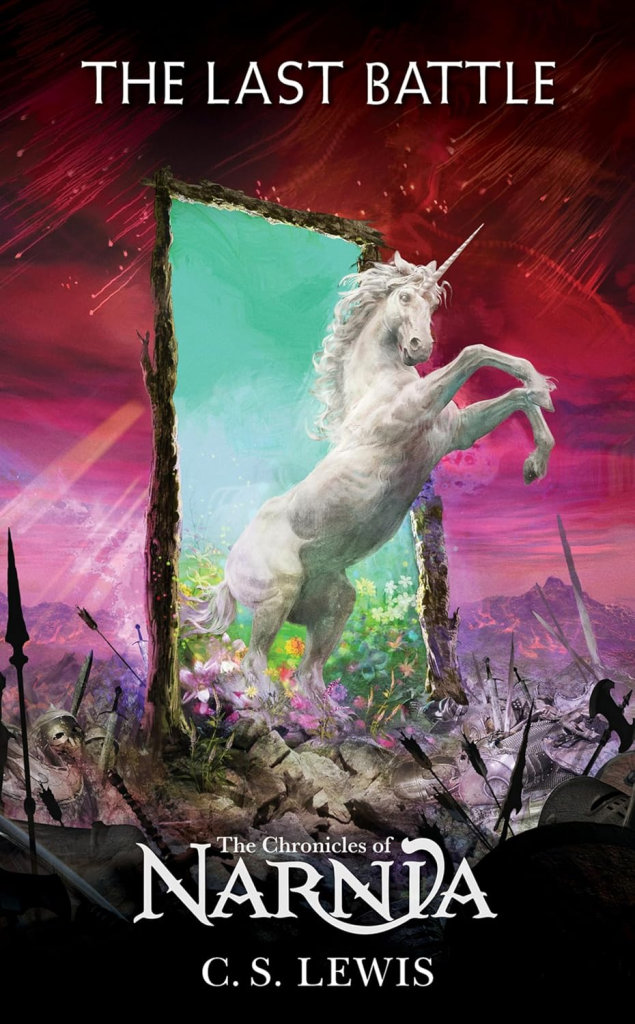
And as He spoke, He no longer looked to them like a lion; but the things that began to happen after that were so great and beautiful that I cannot write them. And for us this the end of all the stories, and we can most truly say that they all lived happily ever after. But for them it was only the beginning of the real story. All their life in this world and all their adventures in Narnia had only been the cover and the title page: now at last they were beginning Chapter One of the Great Story which no one on earth has read: which goes on forever: in which every chapter is better than the one before.
If you’ll remember my musings about “place” in Stage 7–here in Stage 8 we have a happily ever after ending taking place in … a place!
Let not your hearts be troubled. Believe in God; believe also in me. In my Father’s house are many rooms. If it were not so, would I have told you that I go to prepare a place for you? And if I go and prepare a place for you, I will come again and will take you to myself, that where I am you may be also.
The scriptures talk of a “place” in another world after death. Makes me think of the sci-fi genre…
These all died in faith, not having received the things promised, but having seen them and greeted them from afar, and having acknowledged that they were strangers and exiles on the earth. For people who speak thus make it clear that they are seeking a homeland. If they had been thinking of that land from which they had gone out, they would have had opportunity to return. But as it is, they desire a better country, that is, a heavenly one. Therefore God is not ashamed to be called their God, for he has prepared for them a city.
And there’s talk of our bodies just be temporary, like a tent…
For we know that if the tent that is our earthly home is destroyed, we have a building from God, a house not made with hands, eternal in the heavens. For in this tent we groan, longing to put on our heavenly dwelling, if indeed by putting it on we may not be found naked. For while we are still in this tent, we groan, being burdened—not that we would be unclothed, but that we would be further clothed, so that what is mortal may be swallowed up by life. He who has prepared us for this very thing is God, who has given us the Spirit as a guarantee.
…this tent is naked and suffering, but will eventually be swallowed up by life. And it’s God who pulls this off.
Jesus speaks here of this forever world. It is so real to him, he suggests living in a way that anticipates it…
And I tell you, make friends for yourselves by means of unrighteous wealth, so that when it fails they may receive you into the eternal dwellings.
This from Koukl mentions the balance of the Christian story, suggesting that it is perfectly restored in the ending of irreversible change…
And one day we will lay hold of it in its fullness. The war will be over; The anguish will end-all brokenness mended, all evil vanquished, all beauty restored. We will be, once again, “naked and not ashamed.”
For those who receive mercy, the home we have been seeking all of our lives will be ours. It is the Father’s house, and there is a place for us in it.” And he will say, “Come. Enter. Enjoy. Be with Me.” And when he does we will realize (if there ever was, really, any question about it) that our hunger for home was always our hunger for him. And we shall have him.
Well, if the Christian story is reality, as Koukl believes, then my version of the human story is missing something big…
At the end of the seventh and final book in C. S. Lewis’ The Chronicles of Narnia, the suggestion is made that our life on earth is only the cover and title-page of the “Great Story” that commences after our death. …. If we think of our life as finally defined by death, we cut ourselves off from the “Great Story,” the story of eternal life and the story of God. Only then would earthly life become truly meaningless. In the end, there is only one book: the Book of Life.
THE GREAT STORY, by BR. Alan Piper, O.P., Dominacana Journal, December 30, 2015
Let’s remember for a moment the status which was lost by human beings in our inciting incident when Adam and Eve betrayed the Christian God in the Garden…
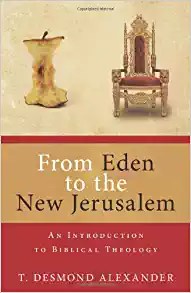
Against this background, the familiar account in Genesis 3 of how the serpent deceives the woman and the man into disobeying God is highly significant. In the light of their royal status and their divine commission to rule over the animals, it is especially noteworthy that Adam and Eve obey the serpent’s instructions rather than those of God. By submitting to the serpent, Adam and Eve fail to exercise their God-given dominion over this crafty animal.
Adam and Eve’s disobedience to God is an act of the utmost treachery. On the one hand, they knowingly betray the Creator who had entrusted them with his authority to govern the earth. On the other hand, they give their allegiance to a cunning creature who challenges God’s authority with the deliberate intention of overturning his careful ordering of creation.
… and shoot all the way to the restoration in the Christian story, when everything will be restored in some way to those who become God’s adopted children.
Look at these passages…
When one of you has a grievance against another, does he dare go to law before the unrighteous instead of the saints? Or do you not know that the saints will judge the world? And if the world is to be judged by you, are you incompetent to try trivial cases? Do you not know that we are to judge angels? How much more, then, matters pertaining to this life!
….humans judge angels?
The saying is trustworthy, for:
If we have died with him, we will also live with him;
if we endure, we will also reign with him;
if we deny him, he also will deny us;
if we are faithless, he remains faithful—for he cannot deny himself.
…humans reign with God.
And between the throne and the four living creatures and among the elders I saw a Lamb standing, as though it had been slain, with seven horns and with seven eyes, which are the seven spirits of God sent out into all the earth. And he went and took the scroll from the right hand of him who was seated on the throne. And when he had taken the scroll, the four living creatures and the twenty-four elders fell down before the Lamb, each holding a harp, and golden bowls full of incense, which are the prayers of the saints. And they sang a new song, saying,
“Worthy are you to take the scroll
and to open its seals,
for you were slain, and by your blood you ransomed people for God
from every tribe and language and people and nation,
and you have made them a kingdom and priests to our God,
and they shall reign on the earth.”
…another about reigning.
Then I saw thrones, and seated on them were those to whom the authority to judge was committed. Also I saw the souls of those who had been beheaded for the testimony of Jesus and for the word of God, and those who had not worshiped the beast or its image and had not received its mark on their foreheads or their hands. They came to life and reigned with Christ for a thousand years.
…and another about reigning.
…yet one more…
No longer will there be anything accursed, but the throne of God and of the Lamb will be in it, and his servants will worship him. They will see his face, and his name will be on their foreheads. And night will be no more. They will need no light of lamp or sun, for the Lord God will be their light, and they will reign forever and ever.
It’s a stunning reversal. And the story closes with the happiest of endings, a complete restoration of the balance in the Christian story.
As a professor at Nibbling County Community College for all these years, I have evaluated thousands and thousands of stories, not many good, but not all of them bad either. And in many of my classes, we have evaluated the best of literature, taking them through the rigors of McKee and Coyne’s teachings about what makes a good story. So, I’ve evaluated the best as well as the worst stories.
After presenting all this material, I submit to anyone who is still reading , that the Christian story is indeed compelling, even sublime. I am humbled and amazed.


