Hi, I’m Hector Klumpp, evaluating the Christian story through McKee’s eight stages of story.
We go to my mentor McKee to learn about Stage Four where the Christian story starts rolling and we learn that our protagonist must have an Object of Desire …
When the CORE CHARACTER senses that the inciting incident has thrown his life out of balance and into jeopardy, he naturally wants to set life back on an even keel. To do so, he conceives of an object of desire. This essential component of all stories is defined as that which the core character feels he must obtain to rebalance his life.
Storynomics, By Robert McKee and Tom Gerace
In the wake of this starting event, the protagonist senses a sudden, radical, possibly dangerous tilt in the ground he stands on, and so conceives of an object of desire, that which he feels he must have in order to put his life back on an even keel. This could be something physical like a hike in pay, a product innovation, or the right person to love; something situational like a job promotion, a divorce, or revenge for an injustice; or something ideational like a deeper insight into himself, a higher goal in his career, or a faith to live by. From story to story, no two objects of desire are quite the same; ideally, each is unique and specific to its tale.
Storynomics, By Robert McKee and Tom Gerace
Keeping in mind that the Christian story is a story about both God and humanity, let’s look back for a moment at our inciting incident, the result of which, realigned the universe so drastically that all of humanity is left wondering what’s wrong with this world…
One of our deepest questions about our world is “What went wrong?” We know the world is broken, but we wonder how that happened, and we want to fix it.
Here’s a popular song I like that stirs up these emotions…
So, it follows that we humans wants to know how the Christian God in going to fix what’s wrong. What has God done since then and what is he doing now to fix it?
We hope to begin to answer these questions here in Stage Four: The Object of Desire.
I thought it would be helpful to take a step back and see stage 4 in the bigger picture…
A story’s spine of action traces the protagonist’s constant quest for his object of desire. His persistent pursuit, driven by his super-intention, struggling against the story’s forces of antagonism, propels the entire telling from the inciting incident through the story‘s progressions to the protagonist’s eventual crisis decision and climactic action, ending in a moment of resolution.
Robert McKee, Dialogue
I think the above synopsizes of story in a few sentences is brilliant.
Here’s a definition of story by McKee, expanded a little from the one above. Can you see where our Stage 4: Object of Desire fits in story?…
But let me try to answer that question by making a simple and clear definition of story itself. Story begins when an event, either by human decision or accident in the universe, radically upsets the balance of forces in the protagonist’s life, arousing in that character the need to restore the balance of life. To do so, that character will conceive of what is known as an “Object of Desire,” that which they feel they need to put life back into balance. They will then go off into their world, into themselves, in the various dimensions of their existence, seeking that Object of Desire, trying to restore the balance of life, and they will struggle against forces of antagonism that will come from their own inner natures as human beings, their relationships with other human beings, their personal and/or social life, and the physical environment itself. They may or may not achieve that Object of Desire; they may or may not finally be able to restore their life to a satisfying balance.
StoryLink: An Interview with Robert McKee, August 18, 2009
So, what is the purpose of The Object of Desire? In story terms, it is about restoring the balance…
When the CORE CHARACTER senses that the inciting incident has thrown his life out of balance and into jeopardy, he naturally wants to set life back on an even keel. To do so, he conceives of an object of desire. This essential component of all stories is defined as that which the core character feels he must obtain to rebalance his life.
Storynomics, By Robert McKee and Tom Gerace
The Object of Desire can also be talked about in terms of an art to merge “streams of want”…
Ultimately, storytelling becomes the art of merging and organizing many streams of want into a flow of events that aims at a single object of desire.
–Paraphrased from Robert McKee and/or Shawn Coyne
Stage 4 is about asking, about our protagonist, what she consciously and subconsciously longs for…
Desire answers what questions: What does the character consciously want? What does he subconsciously long for? Motivation answers why questions. Why does a character want what he wants? Why does he want his particular object of desire?
Storynomics, By Robert McKee and Tom Gerace
Shawn Coyne rates specifying what your protagonist wants as top priority…
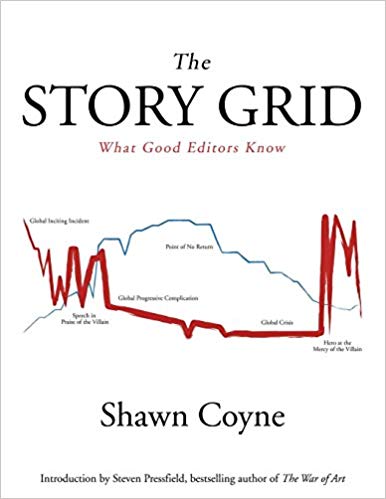
So obviously, the first job you have as your own editor is to specify exactly what your lead character(s) want and what they need. What they will strive to attain and what it subconsciously represents to them in their deepest self must be clearly defined. If it isn’t clear to you as the writer, there is no possibility that it will be clear to the reader.
Shawn Coyne, The Story Grid
And this object of desire must be compelling…
No matter what Story you are writing – a sci-fi love Story, a master detective mystery, a fantastical allegory etc.– you must have compelling objects of desire for your lead protagonist. If the protagonist doesn’t want anything or doesn’t need anything, you don’t have a Story. The book won’t work.
Shawn Coyne, The Story Grid
Okay, before we solve this question about our protagonist’s Object of Desire, we need to tackle a troubling question– I figured from the beginning when we decided God was the core character in the story in the Bible, that it eventually would get awkward, and it has– when it comes to the question of need.
McKee teaches the desire of the protagonist is often driven by a need…
The PROTAGONIST has a conscious desire.[T]he protagonist’s will impels a known desire. The protagonist has a need or goal, an object of desire, and knows it.
Robert McKee, Story
From what I understand so far about the Christian God, it’s far more comfortable to speak about the Christian God having a “goal” rather than a need.
Let’s also remember that it’s a story of God and us humans too, so, while this may be straightforward when it comes to human protagonists with all of our human needs, we have to consider that the Christian God is very different than us human characters in the story.
Because the Christians would say that their God doesn’t suffer from needing anything…
There is no lack or need in God. He is fully self-satisfied, not needing anything outside of himself to be happy or fulfilled.
Divine Aseity, Divine Freedom: A Conceptual Problem For Edwardsian-Calvinism, by James Beilby, Journal of the Evangelical Theological Society (December 2004)
And C.S. Lewis points out that his lack of need is connected with the core value of love …

God has no needs. Human love, as Plato teaches us, is the child of Poverty – of want or lack; it is caused by a real or supposed goal in its beloved which the lover needs and desires. But God’s love, far from being caused by goodness in the object, causes all the goodness which the object has, loving it first into existence, and then into real, though derivative, lovability. God is Goodness. He can give good, but cannot need or get it. In that sense, His love is, as it were, bottomlessly selfless by very definition; it has everything to give, and nothing to receive.
C.S. Lewis, The Problem of Pain
God’s love is selfless, he says. Keep this in mind for later in the story…
And here is a passage from the bible, the book of Acts, to help us learn more about our core character, and shows again that the Christian god has no needs…
So Paul, standing in the midst of the Areopagus, said: “Men of Athens, I perceive that in every way you are very religious. For as I passed along and observed the objects of your worship, I found also an altar with this inscription: ‘To the unknown god.’ What therefore you worship as unknown, this I proclaim to you. The God who made the world and everything in it, being Lord of heaven and earth, does not live in temples made by man, nor is he served by human hands, as though he needed anything, since he himself gives to all mankind life and breath and everything. And he made from one man every nation of mankind to live on all the face of the earth, having determined allotted periods and the boundaries of their dwelling place, that they should seek God, and perhaps feel their way toward him and find him. Yet he is actually not far from each one of us, for
“‘In him we live and move and have our being’;
as even some of your own poets have said,
“‘For we are indeed his offspring.’
Part of the equation in understanding our core character, is that the Christian God is an eternal being, independent in his very being. In light of this, it seems absurd that he would have any lack or needs.
It’s a common thought: If God made the universe, who made God? There are a few things I would want to say in response to this objection. For starters, I don’t believe in a “made” God. Unlike the universe, the Christian God is not bound by time, for He created time and space. And remember premise 2 of the Cosmological Argument: “Everything that begins to exist has a cause.” It is specifically things that have a beginning in time that require a cause. Why? Because such things did not exist at one time and then they did exist at a later time. That change cries out for explanation. God, on the other hand, was never nonexistent; He never began to exist, and therefore reason does not suggest that He had a maker.
Ravi Zacharias, Jesus Among Secular Gods
Is the Christian God having no needs a drawback to the Christian story being compelling? Certainly having God as a protagonist makes this a unique story, but we’ll see…
What is the Christian God’s Object of Desire?
So, let’s jump into solving this mystery about how the Christian God fulfills (or doesn’t fulfill) the Stage 4 Object of Desire:
What do we know so far about the Christian God? We know he’s all about loyal love, and he’s an active protagonist. So what would our loyal love protagonist have as an object of desire and super intention, which are constant, persistent, and driven?
Since that’s a mouthful, let’s see what McKee says about the “quest”…
To understand the Quest form of your story you need only identify your protagonist’s Object of Desire. Penetrate his psychology and find an honest answer to the question: “What does he want?”
So, here’s the reduced formula for Stage 4– this simple but vital question…
What Does God Want?
Here’s the simple answer, reviewing the Christian story from the balance of God’s perfect relationship with us humans, through the unraveling of that balance in the inciting incident of betrayal in a garden, to the ensuing relational separation, and on to the key question about the desire of our protagonist to restore the balance…
The story begins with God’s design for his creation and its attendant blessings (Gen. 1-2). The story of blessing gives way to the story of sin and the cursing of the creation (Gen. 3-11) The good, blessed creation unravels as Adam and Eve’s sin leads into exile away from the paradise of God’s intimate presence. What was once blessing has now become a curse. The key question now is, How will humanity be restored to right relationship with God? How will the curses be removed so the blessings of God may be restored? …. More than anything, God wants a restored relationship.
The Story of Israel: A Biblical Theology, by C. Marvin Pate, J. Scott Duvall
The Christian God wants a restored relationship…more than anything.
Yep. That fits with our core value, a very reasonable Object of Desire, springing right out of the upset of the balance in the inciting incident.
And this very important question of what God wants is a question this Damick guy says we as a culture are avoiding…
For nearly everything else in life, whether it’s technology, health care or even the Super Bowl record of your favorite football team, we demand seriousness, detail, and accuracy. Yet we as a culture are ignoring a basic yet obvious truth: If there really is a God, then who He is and what He might want from us are more important than anything else in the universe.
….
The nature of Truth is that it is true no matter what anyone says about it. In the face of Truth, there is no opinion. Most people already believe that deep down, but they may not apply it to the question that matters most, namely, “Who is God and what does He want from me?”
Andrew Stephen Damick, Orthodoxy and Heterodoxy
The Conscious Object of Desire and the Super-Intention of the Christian God
To expand on this a little, here’s more from Coyne about the conscious object of desire and the super-intention, which are woven together…
The External Content Genres are driven by Arch-plot quests to attain your lead character’s conscious object of desire. The conscious object of desire is the tangible thing that the protagonist wants and actively pursues from the Inciting incident of the Story forward.
Shawn Coyne, The Story Grid
The Christian story is definitely an arch-plot tale; our lead character is God. So, God’s conscious object of desire to restore relationship with humans, he will he actively pursue from the inciting incident in the Garden of Eden forward. Do you think this is what we will find?
Now, let turn to McKee about Super-Intension…
Super-Intention
The super-intention motivates a character to pursue the object of desire.
This phrase restates the protagonist’s conscious desire in terms of his deepest need. …. In other words, the object of desire is objective, whereas the super-intention is subjective: what the protagonist wants versus the emotional hunger that drives him.
Robert McKee, Dialogue
Is it fair to say that while the Christian God doesn’t have needs, he can still have emotional hunger? I think so. I mean, our core value of love is a very emotional thing. It would make sense that the human betrayal in our inciting incident would create an emotional hunger to restore the relationship.
So, it’s safe to say that God’s emotional hunger for restored relationship is his super-intention.
More from Coyne on our Arch-plot story structure…
STRUCTURE AND CONTENT are intimately related. No matter how you slice it, the Arch-plot and Mini-plot STRUCTURE GENRES require a foundational quest, which in turn requires an external conscious and internal subconscious object of desire.
Shawn Coyne, The Story Grid
I’m not sure how to think about the subconscious when talking about God.
But, let’s remember that our story is about God and humans. So even though our inciting incident only involved two people, Adam and Eve, we can see that the story of restoration goes forward to include all of humanity. After all, the Christian God, according to their beliefs, made everything, seen and unseen. This includes all humans, who are said to be made in God’s image, making them very special to him.
Still, just how is the Christian God going to restore the relationship with humans? Spoiler alert, the next few quotes reach far ahead into the story. But I wanted to show you how the Christians are writing about God’s object of desire and super-intention…
So what is this one “story in the stories?” What is this unique interpretation of the universal history of the human race? The essence of this story consists in the reality that God’s creation of both mankind and the world, now ruined by the fall of man into sin, is being restored through the person and work of Jesus Christ. The good news is that both fallen humanity and the fallen world are now in the process of being re-created by God’s Holy Spirit, through His Church, into a Kingdom of God, where one day Christ will return and make all things new in a new heavens and a new earth that will last forever.
You Are Here: Finding Your Story in God’s Story, by Steve Childers, Pathway Learning, January 29, 2014
Here’s a famous theologian, Goheen, telling of the story in the bible…
The Bible tells the story of God’s mission to restore the entire fallen creation and the whole rebellious life of humankind to again live under His gracious rule.
The Urgency of Reading the Bible as One Story in the 21st Century, By Michael W. Goheen, Public Lecture Given at Regent College, Vancouver, B.C., 2 November 2, 2006
And here’s another, telling the grand narrative of God’s mission…
The grand narrative tells the story of God’s mission to reconcile all people to himself and to restore his kingdom reign over all creation.
Adultery, Divorce, And Eldership, By Kevin G. Smith, CONSPECTUS 16:1, September 2013
…”to reconcile all people to himself”, that’s what the Christian God wants.
Here’s a good one, including in God’s quest, our binary core value…

This book tells the GRANDEST, most compelling story of all time: the story of a true God who loves his children, who established for them a way of salvation and provided a route to eternity.
The Bible as One Continuing Story of God and His People, by Max Lucado and Randy Frazee
And, here’s another, putting forward God and his heroic love for his people…
We must approach the bible as a story– The story of God, and God’s people throughout history. …. [T]he bible is a story about God and his heroic love for his people….
Brian Hardin, Passages: How Reading the Bible in a Year Will Change Everything for You
…and again…God’s love shines through this story…
[T]he whole story of the Bible is a story of God’s unmerited love for deeply sinful individuals.
Jerram Barrs, Through His Eyes
Mission…same thing as a quest…
The Bible tells the story of God’s mission through God’s people in their engagement with God’s world for the sake of the whole of God’s creation.
Christopher J. H. Wright, The SBJT Forum: Being Missions-Minded, Southern Baptist Journal of Theology (Winter 2005)
It’s very clear the Christian God has both a super-intention and a conscious object of desire.
Though we haven’t talked much a genre, I wanted point our here that the Christian God’s super-intention and conscious object of desire seems to fit with certain passages from the bible, in a mix of genres.
For instance, here’s a fascinating passage including a very famous prayer, which fits with the Social/Political genre, and, highlights the need and want difference, between God and humans…
“And when you pray, do not heap up empty phrases as the Gentiles do, for they think that they will be heard for their many words. Do not be like them, for your Father knows what you need before you ask him. Pray then like this:
“Our Father in heaven, hallowed be your name. Your kingdom come, your will be done, on earth as it is in heaven.
Give us this day our daily bread, and forgive us our debts, as we also have forgiven our debtors. And lead us not into temptation, but deliver us from evil.”
And here is the famous passage which fits with the Love genre…
For God so loved the world, that he gave his only Son, that whoever believes in him should not perish but have eternal life.
And here is one which fits with the Action/Rescue genre…
First of all, then, I urge that supplications, prayers, intercessions, and thanksgivings be made for all people, for kings and all who are in high positions, that we may lead a peaceful and quiet life, godly and dignified in every way. This is good, and it is pleasing in the sight of God our Savior, who desires all people to be saved and to come to the knowledge of the truth.
And here are two passages which weave the Society/Political with the War Genre…
They will make war on the Lamb, and the Lamb will conquer them, for he is Lord of lords and King of kings, and those with him are called and chosen and faithful.”
Then I saw heaven opened, and behold, a white horse! The one sitting on it is called Faithful and True, and in righteousness he judges and makes war. His eyes are like a flame of fire, and on his head are many diadems, and he has a name written that no one knows but himself. He is clothed in a robe dipped in blood, and the name by which he is called is The Word of God. And the armies of heaven, arrayed in fine linen, white and pure, were following him on white horses. From his mouth comes a sharp sword with which to strike down the nations, and he will rule them with a rod of iron. He will tread the winepress of the fury of the wrath of God the Almighty. On his robe and on his thigh he has a name written, King of kings and Lord of lords.
According to Moser, the Christian God has goals…same thing as a quest. But, also, according to Moser, he’s not going to force anyone…
God’s activity would be purposive, that is, guided by a purpose or goal regarding others. This purpose involves a divine aim to give morally impeccable life to others noncoercively and lastingly, in their companionship, reverence, and worship of God. The giving of such life would include God’s delivering people from what obstructs a morally good life, and God’s empowering the killing of anti-God behavior, without extinguishing human wills. If God extinguished human wills, humans themselves would be extinguished as candidates for genuine moral relationships and companionship with God, thus undermining God’s redemptive purpose. The grand purpose in question is God’s aim to give deep, volitional deliverance to humans. Such deliverance is volitionally deep in its serious moral and spiritual concern, and it includes a cooperative rescue from human moral and spiritual shortcomings that block a cooperative life with God. It frees humans from their selfishness and lack of forgiveness for the sake of a life in reverent companionship with God and in agape and forgiveness toward others, even enemies.
Paul Moser, The Severity of God
Here in stage four I want to introduce you to something wild and crazy which the Christian God did, which weaves together the super-intention and the conscious object of desire in a very surprising way.
He himself enters the story…
The Scriptures reveal to us that in this particular drama, the characters are created for a loving relationship with their author.
This world, like all good stories, vibrates in tune to its author’s heart. This fact remains, despite the catastrophe of the fall, for the fall itself is part of the story. The Scriptures flow with a verdurous life-force shunted from the veins of the Almighty. But even this is not enough. The author of life insists on entering his story, Hitchcock-like. Only his role is no cameo. When God enters the story he takes up the central role, and suddenly it becomes apparent that his role was central all along. And since this is the archetype of all stories, it is fitting that in it, the author’s bone, flesh, and blood are all, quite literally, laid bare. Anything else would be anticlimactic.
God Is the Author Who Enters His Story, By Andrew Shanks, The Gospel Coalition, June 9, 2013
The Christians call it “the Incarnation.”
But in story terms, I like to call it…
The Empathetic Incarnation
This stage four is already impossibly long, so I’ll let you explore the Empathetic Incarnation in this separate post.
That’s it for Stage Four.

