Whew, it’s taken some time to get here, but here we finally are to stage 3, evaluating the Christian story through McKee‘s eight stages of story.
Let’s see what he says we need to focus on in Stage Three where the Christian story really starts to roll…
The inciting incident is an unforeseen event that starts the story by upsetting the balance of the core character’s life. The neutral charge of its core value turns sharply positive or negative. Either way, this radical change puts the character under pressure.
Storynomics, By Robert McKee and Tom Gerace
Definition: The inciting incident launches a story by upsetting the equilibrium of the protagonist’s life and throwing the story’s core value either positively or negatively, but decisively, out of kilter. This turning point initiates the events that follow and propels the protagonist into action.
Storynomics, By Robert McKee and Tom Gerace
Here
is something else McKee says about Stage Three…
[T]he protagonist holds reasonable sovereignty over her existence – until something happens that radically upsets that equilibrium.
We call this event the inciting incident.
To incite means to start; “incident” means “event.”
This first major event starts the story by throwing the protagonist’s life out of kilter.
Robert McKee, Dialogue
If you’re like me when I first learned about inciting incidents, my mind raced to all my favorite movies, recognizing many brilliant inciting incidents, where they appear prominently. I though you’d enjoy this compilation…
That was fun. But, I need to fill this out a little more for you. The inciting incident is also about meaningful change…
The impact of the inciting incident decisively changes the charge of the value at stake in the character’s life.
Robert McKee, Dialogue
And the core value is intertwined…
From the inciting incident on, a story’s core value dynamically changes its charge over the course of the telling. In storytelling, therefore, dynamic means more than “active” or “forceful.” It means constant change and progress caused by an alternation between the positive and negative charges of values inherent in the story’s events.
Storynomics, By Robert McKee and Tom Gerace
Here’s Shawn Coyne with more…
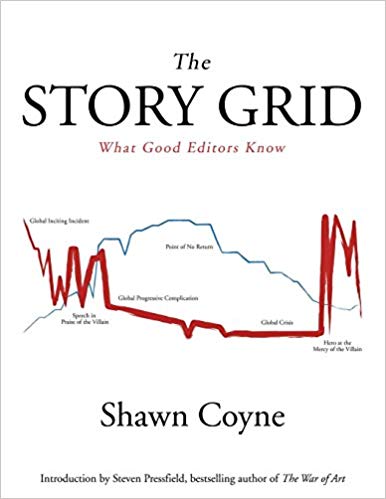
That is, the Inciting Incident of a global Story must make a promise to the reader… the ending. The ending must be a perfectly reasonable and inevitable result of the Inciting Incident. But it must also be surprising. If it is not surprising, it will not drive anyone to recommend it to his friend to read. Don’t promise something and then not deliver it. That is the telltale mark of a writer writing a book that will not work, no matter how great bits and pieces are within.
Shawn Coyne, The Story Grid
If you can hang on until the end of all this research, we’ll see if the Christian story delivers, or disappoints.
Setup and Payoff in Story
Before I tackle the inciting incident in the Christian story, I’d like to take you through a fascinating element of story McKee calls Setups and Payoffs. I see setup in the balance in the Christian story, before the inciting incident, so this seemed like the place to introduce you.
To express our vision scene by scene we crack open the surface of our fictional reality and send the audience back to gain insight. These insights, therefore, must be shaped into Setups and Payoffs. To set up means to layer in knowledge; to pay off means to close the gap by delivering that knowledge to the audience. When the gap between expectations and result propels the audience back through the story seeking answers, it can only find them if the writer has prepared or planted these insights in their work.
Robert McKee, Story
Setups must be handled with great care. They must be planted in such a way that when the audience first sees them, they have one meaning, but with a rush of insight, they take on a second, more important meaning. It’s possible, in fact, that a single setup may have meanings hidden to a third or fourth level.
Robert McKee, Story
It seems to me the setup in the balance of the Christian story is like this–hidden meaning.
Here’s a verse that seems to imply the Christian story includes setups and payoffs…
Behold, the former things have come to pass,
and new things I now declare;
before they spring forth
I tell you of them.”
Isaiah 42:9
So, these setups, according to McKee, often happen in the grunt work…
Subject matter for a story contains three major components: a physical and social setting, a protagonist, and a core value. Life offers the storyteller an infinite variety of each.
In fact, more often than not, the spark of originality that ignites an exceptional story flashes through a creative’s imagination not while she daydreams, but as she sweats out the grunt work of founding her story-world and planting its setups.
Storynomics, By Robert McKee and Tom Gerace
You’ve heard of Moses? He’s the “let my people go!” guy. I learned that he is the author of the book of Genesis, where the Christian story starts in the bible. In the Christian understanding, some claim it was God writing through Moses–the bible being God’s word to man, (not man’s word about God as others would claim). But anyway, either way, I’m picturing Moses sweating out the grunt work, founding the Christian story-world and planting its setups, because they are there…
So, here’s setup I found as early as the second chapter of the Bible, where the balance in the story is laid out. What looks to be a subtle warning, turns out to be laden with layers of meaning…
Then the Lord God took the man and put him into the garden of Eden to cultivate it and keep it. The Lord God commanded the man, saying, “From any tree of the garden you may eat freely; but from the tree of the knowledge of good and evil you shall not eat, for in the day that you eat from it you will surely die.”
Genesis 2:15-17
Right there in the middle of the balance, is a warning which is a setup. And the payoff flows throughout the rest of the bible. Again and again, in story after story, we learn what God meant when he warned of death flowing from relational betrayal toward God.
This warning flushes out a question for the first man, Adam–What do you want? Is it relationship with God? Or will you try to do things your own way? In this way we find the spotlight on a big question for every story–the question of desire for our multi-protagonist story, protagonists that include Adam and Eve.
But it also brings out the question of choice for our multi-protagonist story, which goes hand in hand with every life story…
Life itself has a narrative quality to it, inasmuch as it consists of the same ingredients as stories’ settings, characters, and action. The Christian faith highlights the narrative quality of life. It begins with the premise that every person is the protagonist in his or her own life story. Like literary protagonists, each person is put into situations that test him or her and require choices.
“And It Came to Pass”: The Bible as God’s Storybook, By Leland Ryken, Bibliotheca Sacra 147 (April 1990)
You could say Adam had it all in the balance in the Christian story, and you could also say everything he had was now at stake. Freedom of choice is a BIG deal. Everything hung on the choice he would make in the Garden of Eden.
This ability to chose in the Christian story, flows from the Christian understanding of the foundational identity that we share as humans, which we’ve touched on previously…
The first thing that the Bible has to say about man is that he was made in the image of God. And Saint Thomas, following an exegesis that goes back to John Damscene and the Greek Fathers, interprets the phrase in the Prologue to his treatise on man and the moral life. Man, he says, “is made in the image of God; and by image here is meant that man is intelligent, free in his power of choice, and master of himself . . . the active source of what he does.” The first biblical truth about man is that he is free.
John Courtney Murray, Bridging the Sacred and the Secular: Selected Writings of John Courtney Murray
And this Moser guy (I like him a lot, did I tell you that?) brings it right back to our core value of love. Humans in the Christian story are made is God’s image, with free agency, to enable us to sustain loving relationships…
Why are there such beings as ourselves with the remarkable feature of conscious free agency? We consciously act, for better or worse, on intentions to achieve our ends. We thus differ from the intellectually blind material world. The difference is not just that we can think. It includes our being able to act intentionally, with an end in view. We are purposive agents, able to act in a goal-directed manner. This is an astonishing fact about us, even if we often take it for granted. The Hebraic God’s existence enables us to answer our question about free agents. God created beings in God’s own image of conscious free agency to enable those beings to sustain loving relationships with God and with each other. We are dependent under-creators owing to our being created in the image of the original creator.
Paul K. Moser, WHY ISN’T GOD MORE OBVIOUS?: Finding the God Who Hides and Seeks
But this freedom also gave humans the capacity to reject God. Question: why would God even give them such capacity?
Second, why does the sovereign Yahweh God allow man and woman to choose death? Why give us such a terrible freedom?
Let’s look at it this way: A gift that is forced is not a gift; and love is a gift, but forced love is rape. If freedom were forced on us, we would not be free – we would be mere puppets or slaves. We could not be the image-bearers of God, given authority to be stewards of his good creation. Since God is free, then as his image-bearers, man and woman were made free. Freedom is the power to do the good; but when we do evil, we are no longer free – we are slaves to evil. Only the true and sovereign God is free in his goodness not to do evil. As finite creatures, if we are without the freedom to say no to his gift of freedom, we would be puppets or slaves. To put it another way: Without the freedom to say no, we do not have the freedom to say yes.
What is the Biblical Nature of Human Freedom? by John C. Rankin, Theological Education Institute, 2006
Did you catch that last line? “Without the freedom to say no, we do not have the freedom to say yes.” Otherwise, as Rankin says toward the beginning of the above quote, “forced love is rape”. It’s not love at all. Forced love is contrary to the very core value of the Christian God. It doesn’t line up. The Christian story would be hollow without free agency.
And it is also for us human’s sake that we have free will…
Only in freedom can man direct himself toward goodness. Our contemporaries make much of this freedom and pursue it eagerly; and rightly to be sure. Often however they foster it perversely as a license for doing whatever pleases them, even if it is evil. For its part, authentic freedom is an exceptional sign of the divine image within man. For God has willed that man remain “under the control of his own decisions,” so that he can seek his Creator spontaneously, and come freely to utter and blissful perfection through loyalty to Him. Hence man’s dignity demands that he act according to a knowing and free choice that is personally motivated and prompted from within, not under blind internal impulse nor by mere external pressure.
PASTORAL CONSTITUTION ON THE CHURCH IN THE MODERN WORLD GAUDIUM ET SPES, PROMULGATED BY HIS HOLINESS, POPE PAUL VI ON DECEMBER 7, 1965
This next quote is by a Christian thinker who lived long ago. So, if it’s hard to read, skip to the last paragraph to get my point. But, be warned, this Chesterton guy is brimming with insight and originality. So, you’ll be missing out if you skip to the end…
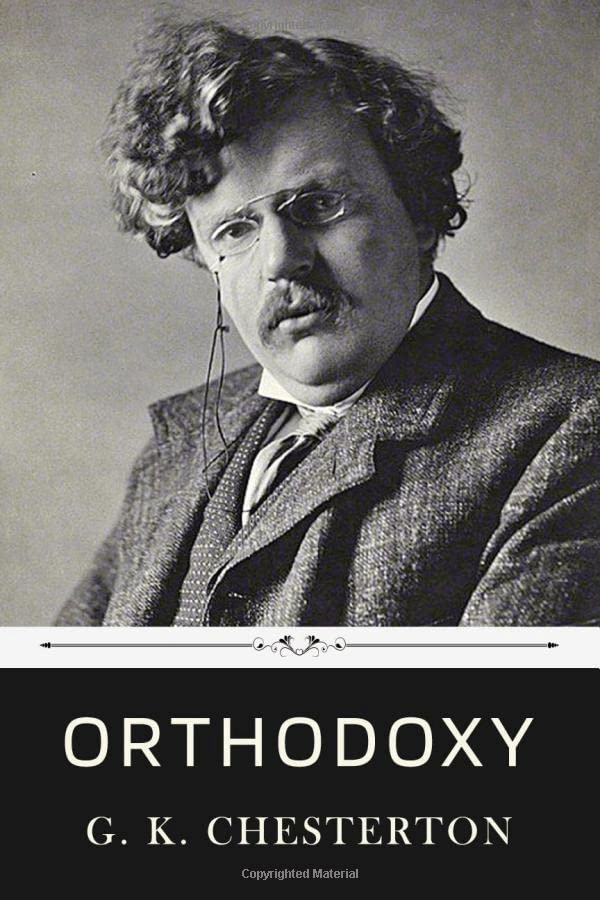
All Christianity concentrates on the man at the cross roads. The vast and shallow philosophies, the huge syntheses of humbug, all talk about ages and evolution and ultimate developments. The true philosophy is concerned with the instant. Will a man take this road or that? — that is the only thing to think about, if you enjoy thinking. The aeons are easy enough to think about, any one can think about them. The instant is really awful: and it is because our religion has intensely felt the instant, that it has in literature dealt much with battle and in theology dealt much with hell. It is full of danger, like a boy’s book: it is at an immortal crisis. There is a great deal of real similarity between popular fiction and the religion of the western people. If you say that popular fiction is vulgar and tawdry, you only say what the dreary and well informed say also about the images in the Catholic churches. Life (according to the faith) is very like a serial story in a magazine: life ends with the promise (or menace) “to be continued in our next.” Also, with a noble vulgarity, life imitates the serial and leaves off at the exciting moment. For death is distinctly an exciting moment.
But the point is that a story is exciting because it has in it so strong an element of will, of what theology calls free will. You cannot finish a sum how you like. But you can finish a story how you like. When somebody discovered the Differential Calculus there was only one Differential Calculus he could discover. But when Shakespeare killed Romeo he might have married him to Juliet’s old nurse if he had felt inclined. And Christendom has excelled in the narrative romance exactly because it has insisted on the theological free will.
Gilbert K. Chesterton, Orthodoxy
In the Christian story, our freedom creates real drama in life, according to Chesterton. The instant (where decisions are made) is really the only thing to think about.
I’ll wait to fill out the setup back in Genesis 2:15-17 when I lay out the inciting incident in the Christian story shortly. And you’ll see it did an amazing job of showing the very nature of human freedom and choice as the payoff came into play.
Here’s more on the connection between desire and human freedom. Again I turn to Peter Kreeft…
Our desires go far deeper than our imagination or our thought; the heart is deeper than the mind. “Out of the heart are the issues of life”, says Solomon. It is our center, our prefunctional root. At this center we decide the meaning of our lives, for our deepest desires constitute ourselves, decide our identity. We are not only what we are but also what we want.
……
Another way of seeing this strange truth about ourselves is to notice that we are double selves. We identity with, or find our identity in, not only what we are but also what we want to be, not only our present actual selves but also our hoped for, future, potential selves.
Peter Kreeft, Heaven: The Heart’s Deepest Longing
I hope to highlight the connection between human identity and desire in the Christian story. You’ll see it shows up in the inciting incident and it keeps on flowing all the way through the end of the story.
The Inciting Incident in the Story in
the Bible
Here we go. The inciting incident in the story in the Bible is the famous story in the Garden of Eden in Genesis Chapter 3 . Right off the bat, a new character is introduced…
Now the serpent was more crafty than any other beast of the field that the Lord God had made.
He said to the woman, “Did God actually say, ‘You shall not eat of any tree in the garden’?” And the woman said to the serpent, “We may eat of the fruit of the trees in the garden, but God said, ‘You shall not eat of the fruit of the tree that is in the midst of the garden, neither shall you touch it, lest you die.’” But the serpent said to the woman, “You will not surely die. For God knows that when you eat of it your eyes will be opened, and you will be like God, knowing good and evil.” So when the woman saw that the tree was good for food, and that it was a delight to the eyes, and that the tree was to be desired to make one wise, she took of its fruit and ate, and she also gave some to her husband who was with her, and he ate. Then the eyes of both were opened, and they knew that they were naked. And they sewed fig leaves together and made themselves loincloths.
Genesis Chapter 3
Right after she and her husband ate the fruit, can you sense the disruption? Immediately, they see everything differently.
That’s the inciting incident which sets the story in motion. And as McKee explains, the Inciting Incident should then flow through the rest of the story…
A story, even when expressing chaos, must be unified. This sentence, drawn from any plot, should be logical: “Because of the Inciting Incident, the Climax had to happen.”…. We should sense a causal lock between Inciting Incident and Story Climax. The Inciting Incident is the story’s most profound cause, and, therefore, the final effect, the Story Climax, should seem inevitable. The cement that binds them is the Spine, the protagonist’s deep desire to restore the balance of life.
Robert McKee, Story
Since, if you’re like me before this research project, you don’t know the rest of the story yet, here’s Desmond Alexander, who does. He takes the balance in the story, through the inciting incident, all the way to the end of the story …
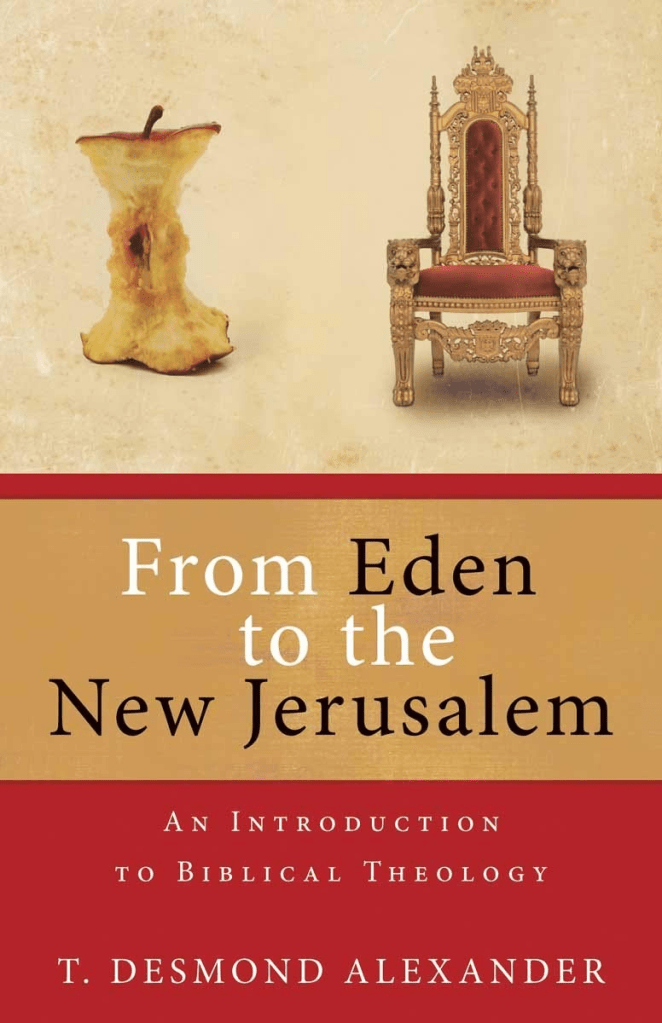
Genesis opens by recounting how God creates an earth, into which he places a human couple, Adam and Eve. This first earth…. is designed to be a divine residence, for here God intends to coexist with people. However, the divine plan for this first earth is soon disrupted when the human couple, due to their disobedience, are driven from God’s presence. The complex story that follows centres on how the earth can once more become a dwelling place shared by God and humanity.
Desmond Alexander, From Eden to the New Jerusalem
Did you notice the payoff for the set up that we talked about earlier in Genesis 2:15-17? After reading the inciting incident, we know know that when God said, “you will surely die”, he clearly wasn’t talking about physical death. The double meaning here is perhaps Adam and Eve being open to believing the serpent that they wouldn’t die physically. But their “eyes were open, and they knew they were naked”. Their death was worse than physical death. It was spiritual death, the death of their relationship with God.
Immediately after disobeying the Lord, see how Adam and Eve experienced something we are familiar with: Shock…
Then the eyes of both were opened, and they knew that they were naked. And they sewed fig leaves together and made themselves loincloths.
And they heard the sound of the Lord God walking in the garden in the cool of the day, and the man and his wife hid themselves from the presence of the Lord God among the trees of the garden.
Genesis 3:7-8
They hid themselves from God, or tried anyway. Can you see how this highlights our core value? Their betrayal broke the relationship.
Let’s walk forward in the story and watch the unfolding of what often happens after shock: Denial…
But the Lord God called to the man and said to him, “Where are you?” And he said, “I heard the sound of you in the garden, and I was afraid, because I was naked, and I hid myself.” He said, “Who told you that you were naked? Have you eaten of the tree of which I commanded you not to eat?” The man said, “The woman whom you gave to be with me, she gave me fruit of the tree, and I ate.” Then the Lord God said to the woman, “What is this that you have done?” The woman said, “The serpent deceived me, and I ate.”
Genesis 3:9-13
McKee brings up another consideration of the inciting incident–does it hit the mark of being a dynamic and fully developed event?…
When an Inciting Incident occurs it must be a dynamic, fully developed event, not something static or vague.
Robert McKee, Story
I think that describes what happened there in the Garden of Eden. It was not anything which was static or vague.
My research gave me a sense for this from how many books, articles, and sermons have been written about the incident in the Garden. Such production usually doesn’t come from “something static or vague.”
The Inciting Incident and the Binary Core Value
Let’s remember our Binary Core value of Loyal Love/Betrayal. Our inciting incident should turn the Balance of Loyal Love from the positive side of loyal love in the balance, to the negative side of the equation– Betrayal …in Biblical proportions…
Andrew H. Madoff, who reported to authorities that his father and longtime Wall Street colleague, Bernard L. Madoff, had masterminded perhaps the largest Ponzi scheme in history, a multi-billion-dollar crime that Andrew described as a “father-son betrayal of biblical proportions,” died Sept. 3 at a hospital in New York City. He was 48.
Andrew H. Madoff, son of convicted financier, dies at 48, by Emily Langer, Washington Post, September 3, 2014
When he said, “Father-son betrayal of biblical proportions”, I doubt he was thinking of the inciting incident in the Christian story, ha, ha.
Remember the material we covered about who these humans are in the balance in the story? A few words that come to mind: viceroy, princes and princesses, creatures exalted above all the rest of creation because they bear the very image of God.
Well, because of who the characters in the story are, and, all which is at stake, the inciting incident in Genesis 3 is an astonishing act of betrayal.
Let’s take a breather and remember how betrayal can be a powerful inciting incident. Here’s Gladiator, as a character named Commodus murders his father:
And here’s a compilation other famous betrayers from the world of film — and notice how often death and destruction come their way…
We’ll jump right back into this by visiting this Desmond Alexander guy. He paints a dismal picture of the depth of the betrayal by the first humans. This inciting incident is literally of biblical proportions. Here’s how the inciting incident impacted the sovereignty of human beings…
Against this background, the familiar account in Genesis 3 of how the serpent deceives the woman and the man into disobeying God is highly significant. In the light of their royal status and their divine commission to rule over the animals, it is especially noteworthy that Adam and Eve obey the serpent’s instructions rather than those of God. By submitting to the serpent, Adam and Eve fail to exercise their God-given dominion over this crafty animal.
Adam and Eve’s disobedience to God is an act of the utmost treachery. On the one hand, they knowingly betray the Creator who had entrusted them with his authority to govern the earth. On the other hand, they give their allegiance to a cunning creature who challenges God’s authority with the deliberate intention of overturning his careful ordering of creation.
By betraying God and obeying the serpent, the royal couple dethrone God. …. The ones through whom God’s sovereignty was to be extended throughout the earth and side with his enemy. By heeding the serpent they not only give it control over the earth, but they themselves become its subjects.
Desmond Alexander, From Eden to the New Jerusalem
This is like Benedict Arnold level– flipping allegiance to the other side.
But I wonder if this betrayal wasn’t just about the sovereignty.
Notice how this passage in the Old Testament clearly connects the inciting incident to what God wants…
For I desire steadfast love and not sacrifice, the knowledge of God rather than burnt offerings.
But like Adam they transgressed the covenant; there they dealt faithlessly with me.
Hosea 6:6-7
So, the inciting incident in the Christian story is of classical design, which displays the binary core value of loyal love/betrayal. But there’s more…
The Negation
of the Negation in the Garden
To further explore the inciting incident in the Christian story, I need to introduce you to a concept in storytelling called the Negation of the Negation. This is a difficult one to grasp (at least it was for me), so hang in there…
Here’s McKee in an interview…
McKee: I don’t know when you took my lecture, but when you did, I suspect that I didn’t actually explain how you get to the negation of the negation. I’ll do that now.
You take what is negative—like hate. Then you do one of two things: Either you disguise it with a lie, so it becomes hatred masquerading as love—like in great films such as Ordinary People. Or you take what is normally directed at the world and turn it inward on the character, so hatred becomes self-hate.
Those are the two techniques to take what is common, everyday antagonism and conflict and push it one step further, to the limit of things.
Camin: Like a volcano exploding or something.
McKee: Well, no, it’s not. It isn’t just quantitative. You don’t just take hate and magnify it so there’s a lot of it—a volcano of it. It changes its quality. It becomes hatred masquerading as love. It becomes self-hate.
It does magnify the power of it, but not by being more and more of it—by changing the quality.
THE GOD OF STORY: AN INTERVIEW WITH ROBERT MCKEE, By Alec Sokolow and Tony Camin, Vice, July 1 2014
Here’s McKee in his first book, Story…
Negation of the Negation means a compound negative in which a life situation turns not just quantitatively but qualitatively worse. The Negation of the Negation is at the limit of the dark powers of human nature.
Robert McKee, Story
Here’s Shawn Coyne repeating McKee on the negation of the negation…
And there is also something worse than hate. That something is what Robert McKee coined as the ”negation of the negation.” And for the love/hate spectrum, the negation of the negation is ”hate masquerading as love” or ”self-hatred.”
Shawn Coyne, The Story Grid
Here’s McKee about how the negation of the negation plays a role in a compelling story…
If a story does not reach the Negation of the Negation, it may strike the audience as satisfying — but never brilliant, never sublime.
Robert McKee, Story
From the beginning, I have set out to discover if the Christian story is compelling, even brilliant or sublime. We should discover a negation of the negation somewhere (typically it is at the crisis/climax of a story). But I think it’s possible I’m seeing the negation of the negation right there in the inciting incident in the Christian story.
While I don’t think McKee would advocate for it, I think he would appreciate the possibility of a negation of the negation showing up in the inciting incident when the story is complex, as the Christian story in the bible is.
So, let me try to lay this out for you, considering if the inciting incident in the Christian Story reaches the “negation of the negation”.
This from Shawn Coyne helped me think through it practically…
The negation of the negation, meaning like the most negative value of knowledge is believing something to be true that is false. If we believe something to be a truth that is not true, that is the worst possible case because we’re kind of lying to ourselves. That’s the most negative. The other negative is understanding that something is untrue, but not doing anything about it.
Shawn Coyne, Q&A WITH SHAWN – PART 2
Let’s play with this a little. I think Coyne in the above quote is talking about the negation of negation with the binary values of Knowledge/Ignorance. And remember, it was a tree of the KNOWLEDGE of good and evil.
With the little understanding I have, I want to try out these values for what is at stake in this Garden of Eden scene. (We haven’t covered this yet, but every scene has a binary value at stake that changes its charge during the scene, while our core value is also at stake throughout the story, but not necessarily in every scene.)
With knowledge/ignorance as the values at stake in this scene, we can see that Adam and Eve reached the negation of the negation when they, as Shawn Coyne says above, “believe something to be true that is not true”. You could say they were surely “lying to” themselves when they ate the forbidden fruit.
And, this observation from Sailhamer lays out what happened in the inciting incident in a way that seems to fit well with the negation of the negation…
Thus, the temptation is not presented as a general rebellion from God’s authority. Rather, it is portrayed as a quest for wisdom and “the good” apart from God’s provision. …. It is clear in the story that the man and the woman had believed that when they obtained the knowledge of “good and evil” they would, on their own, enjoy the “good.”
John H. Sailhamer, The Pentateuch As Narrative
Sailhamer seems to show that they believed a lie.
But Sailhamer also reveals that we shouldn’t lose track of our core value either, for both seem to be brilliantly at play in this scene. Eve was deceived by the serpent and believed a lie (Negation of the Negation with knowledge/ignorance), while they both betrayed God (Loyal Love/Betrayal). Their quest was for wisdom and “good” APART from God. They trashed their relationship with God, believing that they would , on their own, enjoy the “good”.
Here’s a curious thing I discovered. It looks like Adam knew just what the decision was which he was making…
For Adam was formed first, then Eve; and Adam was not deceived, but the woman was deceived and became a transgressor.
1 Timothy 2:13-14
Does this possibly make Adam’s betrayal on a whole ‘nother level?
God’s warning about death in the balance was in full view for him…
There is no such thing as the ‘lust demon’ or the ‘anger demon’ or the demon of lies.’ We may lust or lie or lose our temper, and Satan may use these traits to lead us into disaster areas, but he cannot force us to act. The devil doesn’t make us do it, we choose to initiate our own thoughts and actions.
David Jeremiah with Carole C. Carlson. Escape the Coming Night
Would it be fair to say that while Eve was deceived, Adam chose death? Well, they both died, because they both ate, of course. This the death of their perfect balance, intimate relationship with God. Talk about upsetting the balance…
So, Satan manipulated Eve and seduced her into thinking he was on her side while also deceiving her into believing God had denied her what was rightfully hers…
The serpent subtly casts doubt on God’s words to Adam and Eve and doubt even on God’s own inherent goodness. It suggests that God is afraid that his human creatures might become his equals once they know good and evil experientially, through eating fruit of the tree. God has said that if they eat of it they will die, but the serpent suggests rather that to eat of it is to find the path to true life. In the light of these suggestions, the woman and the man see the tree differently-and they take and eat.
The Drama of Scripture, by Craig G. Bartholomew and Michael W. Goheen
This makes it clear: Eve believe a lie, that they will not die, but rather find the path to true life.
Let’s turn next to talk about the deceiver…
A sociopath has singled out the hero for the most extreme of the life/death values, the end of the line, what Robert McKee calls the Negation of the Negation, the fate worse than death… damnation.
Shawn Coyne, The Story Grid
Gosh, I guess the serpent is a sociopath, ha, ha. Seriously though, he tricked Adam and Eve into choosing a fate worse than death. Just sayin’.
The serpent in the inciting incident is, of course, Satan. Lots has been written about the devil, and here is something that fits beautifully in our discussion…
Rage is the salient characteristic of Satan and of the satanic in men.
There are others, including guile, deceit, and temptation. But at the heart of Satan’s mission is an overwhelming animus against God and the godly.
….
Seduction, subversion, sedition – these are the tools of a creature we once called Satan, the Father of Lies, the loser of the Battle in Heaven.
….
The Devil will say what he has to say and will quote such scripture as he requires in order to achieve the sole objective remaining to him: the ruination of Man and his consignment to Hell.
Michael Walsh, The Devil’s Pleasure Palace
Yikes, this is getting dark. What an antagonist–his “sole objective” is “the ruination of Man and his consignment to Hell.”
Back to Shawn Coyne…
The trickster enjoys mischief in order to change people’s world views in a way.
….
Yes. They want change. They want mischief. They want to knock people — They’re inciting characters. They incite a lot of things. They’re causal inciting things.
Shawn Coyne, Hero’s Journey – Archetypes
Here’s a passage that sure fits, describing Satan as disguising himself as an angel of light…
And what I am doing I will continue to do, in order to undermine the claim of those who would like to claim that in their boasted mission they work on the same terms as we do. For such men are false apostles, deceitful workmen, disguising themselves as apostles of Christ. And no wonder, for even Satan disguises himself as an angel of light. So it is no surprise if his servants, also, disguise themselves as servants of righteousness. Their end will correspond to their deeds.
2 Corinthians 11:12-15
Could this be another indication that the inciting incident reaches the negation of the negation? For Satan, in the scene, masqueraded himself as someone who was helping them reach “the good”. When in reality, he was hate masquerading as love, or if you like, evil masquerading as good.
Sounds to me like the inciting incident in the Christian story reaches the negation of the negation.
The Timing of
the Inciting Incident
Oh, and here is another thought about the strength of the inciting incident in the Christian story…
The principle is: Bring the Inciting Incident into your story as soon as possible, but not until it will hook reader empathy and arouse curiosity. Finding the perfect placement of the Inciting Incident is the key to starting any story.
Interview with Robert McKee – The Storytelling Movie Master, GET STORIED
That seems a pretty good description of what happens with the timing of the inciting incident in the Bible.
And here are some of the other inciting incidents in the books in the Bible, where it happens in the way McKee describes.
The
inciting incident in the book of Exodus occurs in Exodus 1.
The
inciting incident in the book of Joshua occurs in Joshua 1.
The
inciting incident in the book of Judges occurs in Judges 2.
The
inciting incident in the book of Ruth occurs in Ruth 1.
The
inciting incident in the story of Samuel takes place in 1 Samuel 1.
The
inciting incident in the book of Ezra occurs in Ezra 1.
The
inciting incident in the book of Nehemiah occurs in Nehemiah 1.
The
inciting incident in the book of Esther occurs in Esther 1.
The
inciting incident in Job occurs and unfolds in chapters 1-2.
The
inciting incident in the book of Jeremiah occurs in Jeremiah 1.
The
inciting incident in the book of Ezekiel occurs in Ezekiel 1–2.
The
inciting incident in the book of Daniel occurs in Daniel 1.
The
inciting incident in the book of Hosea occurs in Hosea 1.
The
inciting incident in the book of Jonah occurs in Jonah 1.

