Welcome to my research, which came about when I insanely agreed to a dare from my wife and best friends, to evaluate the Christian story through Robert McKee’s Eight Stages of Story McKee laid out in his book, Storynomics.
Before we go further, a giant shout out to Robert McKee!
Okay, Let’s Jump Right In!
Here’s a quick outline of the eight stages of story by McKee:
If we were to dissect every coherent story ever told, eight essential components, assembled over eight stages, would span the creative process from beginning to end:
–Storynomics, By Robert McKee and Tom Gerace
STAGE 1
EFFECT
Meaningful Emotional Satisfaction
STAGE 2
SUBJECT MATTER
Core Value
Protagonist
Society
Place
Time
STAGES 3-8
EVENT DESIGN
Protagonists Actions Versus Antagonistic Reactions
There’s a lot to every stage, which I’ll be filling out for you as we go. And I’ll be drawing from McKee’s other books as well as interviews and articles.
If you want a quick primer on what makes a story according to McKee, I put one together for you here.
You’ll see that I also draw from other writers who write about story, and plenty of Christians philosophers and apologists too.
Here we go…
Stage One: The Audience
Here is how McKee describes this first stage…
Robert McKee: Stage one of the creation of a story is deciding on the target audience, that target audience’s need, even if they don’t know what they need. You know what they need and once they have what they they’re be happy to have it.
PRIME PRINCIPLE: MEANINGFUL EMOTIONAL EFFECT
Before an author composes his story, he needs a clear vision of his audience and the final effect his work will have on both their thoughts and feelings.
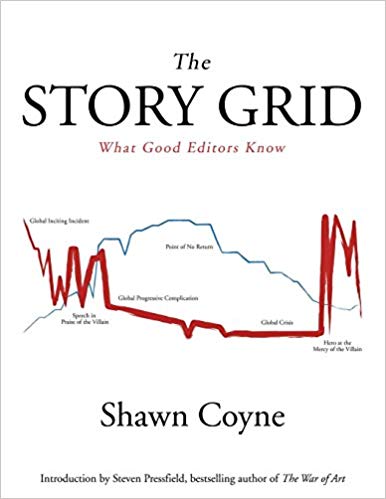
And before we get any further–another giant shout out to Shawn Coyne! You’ll be hearing from him often throughout this research. He is so helpful in understanding story.
On the question of “need” McKee mentions–here’s Shawn Coyne–he calls it the Internal and External Content genres…
1. EXTERNAL CONTENT GENRES define your protagonist(s) external objects of desire.
What they want.
2. INTERNAL CONTENT GENRES define your protagonist(s) internal objects of desire.
What they need.
So, we have two questions to answer right off the bat.
First question–who is the target audience in the story in the Bible?
Everyone.
Too broad? Well, how could it be anything else? If the Christian God made humankind, I guess he has skin in the game for us all. So bear with me and we’ll just go with everyone as our target audience.
Here’s a Christian author that agrees with me- the target audience in the Christian story is Human beings…”all people” he says…
The Christian Story is like many other great stories in that it deals with the great issues all people struggle with and the great questions everyone asks. It’s a story about peace shattered by rebellion, about love and betrayal, about self-sacrifice, and about redemption. All of our deepest aspirations, all of our longings, all of our hopes and even our struggles – all of the conflicts in all of history are all tied to this story.
Wow. That’s a mouthful. This Christian story promises a lot. We’ll see if he’s overselling.
Second Question–What is it we humans need and want?
Here’s one of my favorites, Sol Stein, telling it like it is…
We are driven through life by our needs and wants. So must the characters we create be motivated by what they want. The driving force of characters is their desire.
Yeah, we all have needs and wants, put another way– desire. It’s the driving force. We’re all in the same boat…
We all share the same crucial human experiences. Each of us is suffering and enjoying, dreaming and hoping of getting through our days with something of value.
While you may not agree with this Christian guy’s list of wants for yourself, I appreciate his recognition that our “deeper longings are for something much more than comfort and pleasure” .
My core identity involves my deepest desires about who I am and who I long to be. When I give it careful thought, I realize that my deeper longings are not simply vacation longings. I want something more. I want to be a certain kind of person. I want a life that is centered on what is real, what is beautiful, and what is good. I want a life filled with relationships with other people that are characterized by trust, love, security, and fun. My deeper longings are for something much more than comfort and pleasure.
It’s important to target the question, “What do you want?” It is so key to story, my story included. Here’s McKee with advice that brought Rosetta to me…
More often than not, confusion in story is due to a confusion of desire. It’s when you do not understand what your character wants, that the story goes left and right, up and down, forward and backward and confuses you, because you cannot find that spin of action. You cannot find what it is the character wants, and therefore is constantly struggling to achieve it. And so it becomes confusing.
The same thing would be true of life. When you’re stifled in life, and feel stuck and you don’t feel like you’re living your life fully, the best answer I know, the best way I know to get back on track is to ask yourself the same question: What do I want? What do I really, really want? In the midnight of my soul, ask yourself that question and come up with the honest answer. And then have the courage to pursue that desire. And life becomes a lot more livable.
Doesn’t necessarily mean that your story’s going to have a happy ending. You may or may not get what you want out of life. But at least when you’re pursuing a desire that in your heart you really want, and not what other people want, not what you think you should want and all that. But when you’re pursuing a desire that you really, really want, then as I said, life becomes livable. And your life story comes to life.
It’s good to remember the reality, while talking about needs and wants, that we live in a world where there’s never enough…
The creative force that rouses powerful storytelling is, as Jean-Paul Sartre taught, scarcity. There simply isn’t enough of anything in this world to go around: not enough food; nor enough love, and never enough time. To satisfy human needs from their most basic to their most dream-filled, we must battle paucities that deny our yearnings. In short, the essence of reality is humanity’s ongoing strivings against negation.
Here’s John Truby on how needs and desires drive every story…
All stories are a form of communication that expresses the dramatic code.
The dramatic code, embedded deep in the human psyche, is an artistic description of how a person can grow or evolve. This code is also a process going on underneath every story. The storyteller hides this process beneath particular characters and actions. But the code of growth is what the audience ultimately takes from a good story.
Let’s look at the dramatic code in its simplest form.
In the dramatic code, change is fueled by desire. The “story world” doesn’t boil down to “I think, therefore I am” but rather “I want, therefore I am.” Desire in all of its facets is what makes the world go around. It is what propels all conscious, living things and gives them direction. A story tracks what a person wants, what he’ll do to get it, and what costs he’ll have to pay along the way.
“Desire… is what makes the world go around”, we can’t deny it or get around it.
5 Categories of Human Need
Since our audience is all of humanity, we have to ask what needs and desires do all humans share? They are so deep and wide. While it’s impossible to be exhaustive, I believe it’s valuable to try and hit some high points, since this story is claiming it’s for EVERYONE.
Again Sol Stein is helpful. He advises to writers to pick your “want” carefully…
It is easier for the reader to identify with a want that is close to universal and not too specialized. The wants that interest a majority of readers include gaining or losing a love, achieving a lifetime ambition, seeing that justice is done, saving a life, seeking revenge, and accomplishing a task that at first seemed impossible.
Taking Stein’s advice,, but not matching up with his list, I have targeted 5 categories of human needs and desires to explore. Again, bear with me. This is a BIG story, with a BIG audience, and it’s impossible to do exhaustive research on EVERYONE’s needs and desires. But I figure the Christian story should be expected to hit on what I see as the top human needs and desires.
1. The Need for Relational Connection
One of the most powerful ways to see the need for relational connection is the need and want for human closeness. It shows up as the top topic in bestselling books…
But perhaps the most interesting similarity between Grisham and Steel is that their top-shared topic also happens to be the topic our model found most useful in identifying bestsellers. What that means is not that it is the most common topic among bestselling writers, since those topics may also be common in non-bestsellers. Instead, it is the topic that is most overrepresented in bestselling books when compared to nonbestsellers, and thus it has considerable predictive power. Put more bluntly, it is a topic that writers would do well not to ignore. The topic is deceptively simple, perhaps even mundane, when seen against the backdrop of bold topics such as sex and crime. It is a topic that is indicative to scenes of human interaction and relationships, but we need to be more specific than that. It’s not as heady as romantic love, or passion, and neither is it the typical relationship between teacher and class or employer and boss. It is more specifically about human closeness and human connection. Scenes that display this most important indicator of bestselling are all about people communicating in moments of shared intimacy, shared chemistry, and shared bonds.
….
We said that there are several topics, such as twenty-first century technologies, that are overrepresented in contemporary bestsellers compared to novels that tend not to sell in big numbers. The top differentiating topic is what we have called human closeness, and that closeness can exist in any type of relationship.
Human connection is the key to selling stories. And human connection is also embedded deeply in our culture, as divided as we are here in America.
In these politically polarized times, we are repeatedly reminded that humans are a tribal species. But our sociality goes much deeper than that. Whether our idea of a good time is a quiet evening at home or a night on the town, all of us must form and maintain rich interpersonal connections to survive and thrive. From the basic attachment of an infant to his mother to the complex global economy, social relationships are key to human success.
Not surprisingly then, a significant amount of human activity is driven by the need to belong. Consider the personal risks we will take and ambitions we will deny to preserve meaningful social bonds. Or the extent to which we will throw caution to the wind for love. Or the bond of brotherhood that inspires great courage under fire in the chaos of war.
The Curse of Modern Loneliness, By Clay Routledge, National Review, January 16, 2018
Is the need for relational connection found in the Christian story? Turns out it is.
Here’s a passage at the very beginning of the Bible, not long after the Christian God made Adam, the first man. But before he made Eve…
Then the Lord God said, “It is not good that the man should be alone; I will make him a helper fit for him.”
In the Christian story, every other thing God made in the beginning God says is “good”. This is the first “not good”, and it’s about lack of relationship, clearly foundational in the Christian story.
Here’s more on the need and desire for relationship in the Christian story…
For God so loved the world that he gave his one and only Son, that whoever believes in him shall not perish but have eternal life. For God did not send his Son into the world to condemn the world, but in order that the world might be saved through him.
The above verse, spoken by Jesus pretty early in the last three years of his life, is one of the most familiar verses in the whole Bible, at least to Christians. There’s good reason for that, as you’ll see later on when we look into the Controlling Idea in the Christian story, just to whet your appetite.
This next verse, from the same gospel of John, was spoken by Jesus at the very end, just before the trial and crucifixion. This is among the last things Jesus said to his closest companions, the disciples. Since he’s talking to God, I guess you’d call that a prayer…
When Jesus had spoken these words, he lifted up his eyes to heaven, and said, “Father, the hour has come; glorify your Son that the Son may glorify you, since you have given him authority over all flesh, to give eternal life to all whom you have given him. And this is eternal life, that they know you, the only true God, and Jesus Christ whom you have sent.”
In that last line there–“that they (that’s us) know you (that’s God)…and Jesus Christ–pretty on the nose relational connection.
Okay, enough of that. Let’s move on to my favorite of the five categories of need and desire…
2. The Need and Desire for Meaning
This really gets my juices flowing, as the desire for meaning shaped my story powerfully. This Daniel Taylor guy speaks right into my experience.…
Our greatest desire, greater even than the desire for happiness, is that our lives mean something. This desire for meaning is the originating impulse of story.
Many famous people have identified man’s primary drive many ways, but it looks like Viktor Frankl had it right after all…
One of the most important books of the 20th century — it remains a best-seller 59 years after it was first published — is Man’s Search for Meaning by Viktor Frankl.
Marx saw man’s primary drive as economic, and Freud saw it as sex. But Frankl believed — correctly, in my opinion — that the greatest drive of man is meaning.
One can be poor and chaste and still be happy. But one cannot be bereft of meaning and be happy — no matter how rich or how sexually fulfilled one may be.
Explaining the Left, Part III, By DENNIS PRAGER, National Review, August 28, 2018
…the greatest drive of man is meaning…I found my meaning through archplot story, which is what the Nihilist Lites of America (NLA) is all about.
They didn’t interview me for the following statistics, but meaning and purpose was a dragon on my back for years. I thought about it everyday, and before I embraced archplot story as the way to live my life, I was so depressed, I almost lost my marriage over it.
In addition to asking about feelings of gratitude, the new study also asked respondents how often they think about the meaning and purpose of life. Slightly more than half of Americans (55%) – including 59% of Christians, 53% of members of non-Christian faiths and 45% of religious “nones” – say they think about the meaning and purpose of life at least once a week. Regular contemplation of life’s meaning is most common among those who are religiously observant in a variety of ways. For example, two-thirds of those who say religion is “very important” in their lives (67%) also say they regularly think about the meaning and purpose of life, compared with 38% of those who say religion is “not too” or “not at all” important to them.
….
A majority of U.S. adults (55%), including roughly six-in-ten Christians, think about the meaning and purpose of life at least once a week. Within Christianity, most members of historically black Protestant churches (72%) and Mormons (71%) often think about the meaning of life, as do majorities of evangelical Protestants (64%) and Orthodox Christians (63%). By comparison, 52% of Catholics and 51% of mainline Protestants say they regularly ponder the meaning of life. Among the religiously unaffiliated, 45% say they think about the meaning and purpose of life at least once a week.
U.S. Public Becoming Less Religious, Pew Research Center, November 3, 2015
This next quote includes my wife Rosetta’s favorite line from all of Shakespeare. Though she would disagree that she “require(s) coherence and meaning”. She’s living just fine as her own driving force.
Still, in the end, human beings require coherence and meaning. They cannot live, at least they cannot live well, if they feel that life and history are nothing but “a tale told by an idiot, full of sound and fury, signifying nothing.”
The Myth of the Civil War, by Matthew Berke, First Things (October 1991)
So many find meaning in podcasts, like our NLA tribe. We gather to find meaning and purpose…
They (podcasts) don’t patch over the existential void so much as reveal how avidly we yearn to fill it. “People need to have meaning, to be needed, and have a purpose in life,” said Mr. Junger. “If you live in a safe society with plenty of money, and you need something bigger than you to engage with, the shrine of the body and the temple of the mind, then go for it — you’ve got nothing else to do.”
The Podcast Bros Want to Optimize Your Life, By Molly Worthen, New York Times, August 3, 2018
Let’s turn to how Christians talk about meaning.
Remember, one basic thing which makes story compelling is how it involves meaning. Is there a connection between meaning and God?
Yes, according to this fella. However, if he thinks all humans self-destruct in nihilism, he hasn’t visited Nibbling,…
Without God, no basis exists for morality, meaning, the dignity of human beings, knowledge, or truth. Humans cannot reject God and pretend as if everything remains the same without him. In Wojtyla’s words, “[t]he tragedy of atheistic humanism … is that it strips man of his transcendental character, destroying his ultimate significance as a person.” Similarly, Wojtyla adds, citing the Second Vatican Council, “when God is forgotten the creature itself is unintelligible.” Schaeffer agrees, stating “[m]an, made in the image of God, has a purpose—to be in relationship to the God who is there .… Man forgets his purpose, and thus he forgets who he is and what life means.” Without God, therefore, humans self-destruct in nihilism.
And yes, according to Kreeft (possibly my favorite of the Christian authors I studied), God and meaning are inseparable.
If there is no God, there is no ultimate meaning to life. If we came ultimately from nothing and die ultimately into nothing, we are ultimately nothing. If we are made in the image of God, we are the children of the King of Kings. But if we are made only in the image of King Kong, we are only clever apes.
Here’s more from a famous Christian apologist…
The Absurdity of Life Without God (William Lane Craig)
There’s no doubt about it, the human need for meaning is deeply interwoven with the Christian God. You can’t have one without the other, it seems.
3. The Need & Desire for Happiness
Remember this famous observation?
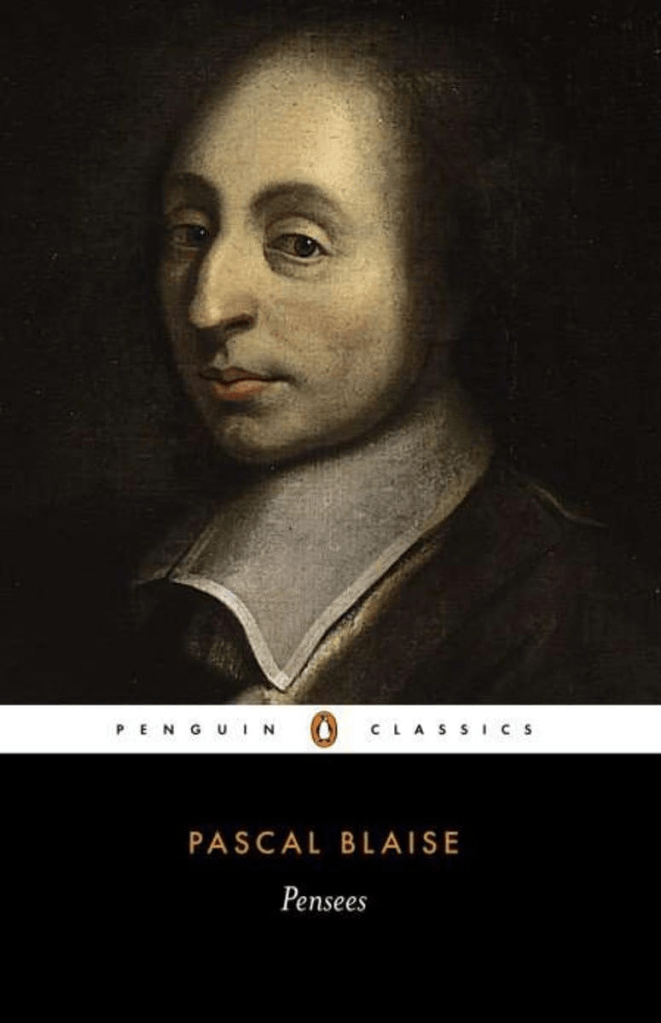
All men seek happiness. This is without exception. Whatever different means they employ, they all tend to this end. The cause of some going to war, and of others avoiding it, is the same desire in both, attended with different views. The will never takes the least step but to this object. This is the motive of every action of every man, even of those who hang themselves
.Blaise Pascal, Pensees, 425
Happiness is a universal, it seems. Spot on for our target audience, for Pascal says “All men” seek it.
As far as the Christian story goes, it looks like God doesn’t have a problem with pursuing happiness…
Nowhere in the Bible does God condemn people for longing to be happy. People are condemned for forsaking God and seeking their happiness elsewhere (Jeremiah 2:13). This is the essence of sin.
The Life-Changing Discovery of Christian Hedonism, by Sam Storms, Desiring God, NOVEMBER 17, 2011
4. The Need & Desire for Order
I hate chaos, it is my enemy.
Robert McKee understands one of the basic human needs is for order…
McKee: The desire in human beings for order, for meaning, to understand causal connections, the desire to control your existence is genetic, all right? Because the underlying imperative of life is to survive, and chaos is the enemy. Therefore you must bring order. You must be able to predict, you must be able to take an action with a sense of what will probably happen when you take the action, and have some confidence that you’ll get the results you intended, or you’re out of control and therefore death is right around the corner. The classical model shows retroactively, when you get to the ending, how indeed everything was connected, and gives you a model for experience that, somehow, will help you live well.
THE RUMPUS INTERVIEW WITH ROBERT MCKEE, BY SHEILA HETI, The Rumpus, November 17th, 2009
We humans are passionate about order…
The passion for … replacing surprise with order, is a persistent part of human nature.
Order is “the first need of man”…
We must return to order, which Russell Kirk so aptly called “the first need of man.” Outside of order, there is no common ground upon which to govern the nation. Instead, it will lead to what some are calling a savage “tribalism.”
Russell Kirk again–order is preeminent…
In the first chapter of The Roots of American Order, Russell Kirk asserts the preeminence of the human need for order. On the edge of human affairs, on the margins of human striving, lies the “gaping void”—chaos—“that always threatens to swallow us whole.” Keeping ourselves away from it is life. Getting nearer to it is death. These forces of order and chaos are at war within and without ourselves, for “the want of order is the mother of confusion.” We can’t avoid the pull of chaos alone. We need the strength of others to resist with us. The city encircles and protects us. Through mutual striving to stem off chaos, human beings create the conditions and the elements of good order.
The Uprooting of American Order, By Jeff Polet, Modern Age, WINTER 2019
What about Christianity and order? It looks like it was imbedded in their story from the beginning…
Modern notions of order and disorder are largely shaped by mechanical concepts derived from Newtonian physics that suggest that the universe is an orderly, albeit supremely complex, machine. Such clockwork imagery is not found in Scripture, which sees the orderliness of the universe in much more personal terms.
……
Although the divine orderliness of the universe is often manifested in patterns of regularity, the divine order is most frequently described in Scripture by various separations or distinctions. For example, in the creation narrative in the first chapter of Genesis, God overcomes the formlessness of the primeval universe with a series of boundaries: between light and darkness, day and night, sea and dry land (Ps. 104:9), the firmament and the heavens, the creatures that live in those various realms, and human beings, created in the image and likeness of God and called upon to rule over the rest of the creation (Gen. 1:28).
5. The Need & Desire for Identity
I have to admit, before this research on the Christian story, I never would have included this as one of the highlights of universal human needs. Since I’ve always accepted seeing myself as just a collection of cosmic dust, or a walking bag of chemicals, I can’t say I’ve thought much about my identity.
But I found in my research the question of identity in the Christian story is profoundly mysterious. It assigns value to humans that is astonishingly significant. I included this quote from Kreeft above in the human need for meaning, but I wanted to run it again here in this section on identity. In the question of who we are, my secular view would say “clever apes.” But if we humans are made in God’s image, we are the “children of the King of Kings”.
If there is no God, there is no ultimate meaning to life. If we came ultimately from nothing and die ultimately into nothing, we are ultimately nothing. If we are made in the image of God, we are the children of the King of Kings. But if we are made only in the image of King Kong, we are only clever apes.
Being “made in the image of God” that Kreeft brings up, will shows up throughout my research, as it’s essential to the Christian story. And according to this guy, is central to what it means to be human.
Nothing is more basic than the recognition that being constituted in the image of God is of the very essence of and absolutely central to the humanness of man. It is the key that unlocks the meaning of his authentic humanity. Apart from this reality he cannot exist truly as a man, since for man to deny God and the divine image stamped upon his being and to assert his own independent self-sufficiency is to deny his own constitution and thus to dehumanize himself.
There is so much in the Christian story about human identity. I thought I’d include a few more…
“Who am I” is the fundamental question of our existence. Our self-identity is the window through which we perceive and engage the world; it determines all that we do. Our “inscape,” using the poet Gerald Manley Hopkin’s term, determines our landscape. … How we understand ourselves dictates how we behave. Emil Brunner may have overstated the case, but he put his finger on the importance of this concept: “The most powerful of all spiritual forces is man’s view of himself, the way in which he understands his nature and destiny; indeed, it is the one force which determines all the others which influences human life.”
I’m aware now that the human quest for meaning, and the human quest for identity are intimately intertwined…
The admonition Know yourself was carved on the temple portal at Delphi, as testimony to a basic truth to be adopted as a minimal norm by those who seek to set themselves apart from the rest of creation as “human beings”, that is as those who “know themselves”. Moreover, a cursory glance at ancient history shows clearly how in different parts of the world, with their different cultures, there arise at the same time the fundamental questions which pervade human life: Who am I? Where have I come from and where am I going? Why is there evil? What is there after this life? … They are questions which have their common source in the quest for meaning which has always compelled the human heart. In fact, the answer given to these questions decides the direction which people seek to give to their lives.
John Paul II, Fides et ratio: To the Bishops of the Catholic Church on the relationship between Faith and Reason, 1998.09.14
Even Steven Pressfield weighs in on this. It must be sought, and it’s hard to embrace…
Each, as an individual, needs to find who we are. …. And when you embrace it, it’s always through adversity. Nobody hands it to you.
Steven Pressfield, Writing THE LION’S GATE (5 of 12): The Proposal, Pt. 3—Why?
And, according to Sharansky, it’s a magnetic force that moves and directs the worlds events. That’s powerful…
The desire for freedom is a powerful force for peace and stability in the world. But as powerful as freedom is in the hearts of men and women everywhere, it is not the only force that moves them. There is another, equally powerful force at work. This is the power contained in identity. Identity is the magnetic force field in which the energies of the world today are moving. It is a force that is little understood in the West, but one that influences and even directs events, from the broadest global and international politics to the most local and immediate situations.
And that is why what Robert McKee says…
Culture is a quarter inch thick. Human nature is bottomless.

