While how the Christian story fits with stages 1-4 maybe was a bit more obvious, here at Stage Five, as we consider the Christian God’s first action, there’s a lot to consider …
STAGE FIVE: THE FIRST ACTION
PRIME PRINCIPLE: TACTICAL CHOICE
To rebalance his life, the core character takes an action, a tactic designed to cause a positive, enabling reaction from his world that will either deliver his object of desire or at the very least move him toward it.
So, we’ll begin by asking, “How does Stage Five fit with the story in the Bible? After we discovered the Inciting Incident in the Christian story, and identified the Christian God’s Object of Desire, now we need to ask ourselves, what is the Christian God’s first tactical action? It would be an action designed to cause a positive, enabling action that moves him toward his Object of Desire (to restore the relationship with humans).
Or, as this next quote teaches, “What unique actions does God take to launch his quest to restore the balance?”
Stage Five launches your protagonist’s quest. To reach his object of desire, the core character takes an action based on his best sense of expectation. Spontaneously or consciously, he uses words and deeds as tactics to evoke the positive reactions he hopes to get from his world. The unique identity of the protagonist determines the unique actions he will take.
While it may feel awkward to think this way, in story terms, we learn from the above quote, it’s important to note that this First Action doesn’t have to be taking a physical action–“a deed”. Because verbal actions–“uses words”– is every bit an action taken…
Second, whether mental or vocal, whether thought inside the mind or said out into the world, all speech is an outward execution of an inner action. All talk responds to a need, engages a purpose, and performs an action. No matter how seemingly vague and airy a speech may be, no character ever talks to anyone, even to himself, for no reason, to do nothing. Therefore, beneath every line of character talk, the writer must create a desire, intent, and action. That action then becomes the verbal tactic we call dialogue.
Here’s more on how effective dialogue works…
[T]he two primary principles of effective dialogue:
First, each exchange of dialogue creates an action/reaction that progresses the scene.
Second, although these actions find expression in the outer behavior of talk, the wellspring of character action flows invisibly from the subtext.
As I considered the verbal action possibility as a First Action by the Christian God, I found this scripture in the new testament gospel of John, which is very interesting, though I don’t understand it well.
It caught my attention because the gospel of John starts out (to tell the story of Jesus’ time on earth…which is what the gospels do) just the same as the first verse in the whole bible does…”In the beginning God …” (Genesis 1:1).
Then the Genesis passage goes on to say–“then God said” (verbal action) (Genesis 1:3), and while here in the gospel of John–“In the beginning was the Word…” (again, verbal action)…
In the beginning was the Word, and the Word was with God, and the Word was God. He was in the beginning with God. All things were made through him, and without him was not any thing made that was made. In him was life, and the life was the light of men.
And then, from the same passage, it says this, just a few verses later…
And the Word became flesh and dwelt among us, and we have seen his glory, glory as of the only Son from the Father, full of grace and truth.
So…Jesus seems to be “the Word”?
I’m in over my head here, but if Jesus is “the Word”, and words are verbal, then ultimately would Jesus be God’s verbal action? …something to consider that we’ll explore more in a bit.
And for further consideration, try and take in what this Keller guy says, the Christian God seems to be raising verbal action to a whole different level …
It is important to know not only in general that the Bible is true but also that in the Bible God’s words are identical to his actions. When he says, “Let there be light,” there is light (Genesis 1:3). When God renames someone, it automatically remakes him (Genesis 17:5). The Bible does not say that God speaks and then proceeds to act, that he names and then proceeds to shape – but that God’s speaking and acting are the same thing. His word is his action, his divine power.
So how do we hear God’s active Word today if we are not prophets or apostles who actually sat at Jesus’ feet? God’s words in the mouths of the prophets (Jeremiah 1: 9-10), written down, are still God’s words to us when we read them today (Jeremiah 36:1-32). Ward says that it is crucial for the preacher to recognize this. “God’s ongoing dynamic action through the Spirit” is “supremely related to the language and meanings of Scripture.”10 In other words, as we unfold the meaning of the language of Scripture, God becomes powerfully active in our lives. The Bible is not merely information, not even just completely true information. It is “alive and active” (Hebrews 4:12)–God’s power in verbal form. It is only as we understand the meaning of the words that God names us and shapes us and recreates us.
…God speaking and acting is the same thing, he says, which fits with story.
So, back to our question…
What unique action does God take to launch his quest to restore the balance?
From what I see, the Christian God first action is indeed a verbal one.
And I’ll try to show, the Christian God’s first action was also the launch of his quest.
Here is the text, just after Adam and Eve ate the forbidden fruit. It’s in Genesis Chapter 3…
And they heard the sound of the Lord God walking in the garden in the cool of the day, and the man and his wife hid themselves from the presence of the Lord God among the trees of the garden. But the Lord God called to the man and said to him, “Where are you?” And he said, “I heard the sound of you in the garden, and I was afraid, because I was naked, and I hid myself.” He said, “Who told you that you were naked? Have you eaten of the tree of which I commanded you not to eat?” The man said, “The woman whom you gave to be with me, she gave me fruit of the tree, and I ate.” Then the Lord God said to the woman, “What is this that you have done?” The woman said, “The serpent deceived me, and I ate.”
The Lord God said to the serpent,
“Because you have done this,
cursed are you above all livestock
and above all beasts of the field;
on your belly you shall go,
and dust you shall eat
all the days of your life.
I will put enmity between you and the woman,
and between your offspring and her offspring;
he shall bruise your head,
and you shall bruise his heel.”Genesis Chapter 3
There’s the text, showing the Christian God’s first action…a verbal one, first to Adam and Eve in the forms of questions. However, I want to focus now on the verbal action God takes with the serpent…the head and heel bruising set up…Which brings me to introduce you to another one of McKee’s story concepts–
Set up and Pay off in the Christian story
My research has lead me to ask an astonishing question about God’s verbal action with the serpent–
What if God’s first action was Setup which runs through the rest of the Christian story?
Let’s revisit McKee on an element of story he calls–Set Up and Pay Off, which we visited briefly in Stage 3…
To express our vision scene by scene we crack open the surface of our fictional reality and send the audience back to gain insight. These insights, therefore, must be shaped into Setups and Payoffs. To set up means to layer in knowledge; to pay off means to close the gap by delivering that knowledge to the audience. When the gap between expectations and result propels the audience back through the story seeking answers, it can only find them if the writer has prepared or planted these insights in their work.
Setups must be handled with great care. They must be planted in such a way that when the audience first sees them, they have one meaning, but with a rush of insight, they take on a second, more important meaning. It’s possible, in fact, that a single setup may have meanings hidden to a third or fourth level.
And here’s more from Coyne about set up and pay off…
There’s one more: Clues. It also has to have very, very specific clues that are usually put in and seeded at the very beginning of the story and don’t pay off until much later on.
I’ll plunge into this famous verse in the new testament, which we already visited when I explained my thoughts about the controlling idea in the Christian story. But, I suspect, this same verse may in some manner express the quest of the protagonist. And, another thought– could Jesus possibly be payoff? If these verses are all these things, it makes sense that it’s so famous…
For God so loved the world that he gave his one and only Son, that whoever believes in him shall not perish but have eternal life. For God did not send his Son into the world to condemn the world, but to save the world through him. Whoever believes in him is not condemned, but whoever does not believe stands condemned already because he has not believed in the name of God’s one and only Son.
I may be in over my head, but this commentary about our active protagonist’s first action (that is, God) written by humans who have thought about these things deeply may help fill in the blanks …
Is the story of the world to end so soon and so sadly? By no means. Even in the tragic tale of sin’s entrance into the world, God does not give up his purposes for his creation and his kingdom. Though Adam and Eve flee from him, God graciously takes the initiative to seek them out. In declaring judgment, God curses the serpent and promises to put enmity between the serpent’s offspring and that of the woman (Genesis 3:15). The woman’s offspring will crush the serpent’s head: God promises to extinguish the evil forces Adam and Eve have unleashed. This is the first biblical promise of the Gospel: Christ is to be “the seed of the woman” and will defeat Satan, though at great cost to himself, in the “wounding” of his “heel.”
The Drama of Scripture, by Craig G. Bartholomew and Michael W. Goheen
Did you catch that? In the set up back here in the beginning of the story, God says mysterious things about Eve’s offspring, which Bartholomew says is Jesus, who will “crush the serpent’s head”.
But this set up stuff goes far deeper than just head crushing and heel bruising. Try to take in how Sailhamer says the set up thread in Genesis 3:15 pays off through the whole bible, beginning to end…
Like a stained glass window, the Prophets and the Writings give us the important bits and pieces of the prophets’ vision. I have in mind something like the way Isaiah 63 draws a glimmer of light from the poem in Gen 3:15 and passes it on to Daniel 7 through the prism of Genesis 49. From there on it passes through the NT on its way to the vision of the “rider on the white horse” in Revelation 19. Isaiah takes as his starting point the picture of the king who, in Genesis 49, “washes his clothes in the blood of grapes.” He then builds that picture into one of a mighty warrior treading in the wine presses of divine wrath. In doing so, Isaiah consciously links Genesis 49 to the first messianic poem in the Pentateuch, Gen 3:15. …. But also like a stained-glass window, these points of light converge into the larger picture.
While Sailhamer is alluding to details of the Christian story beyond my understanding, this Alexander guy spells it out more plainly…
While the opening chapters of Genesis allude briefly to God’s blueprint for the earth, his plans are almost immediately overturned — for Adam and Eve betray their Creator and give their allegiance to his enemy. Expelled from God’s presence, they forfeit their unique status as viceroys of the divine king. Against this tragic background, the rest of the biblical meta-story describes how God acts to reclaim the earth, and especially its people, from Satan’s control. In the process of denouncing the serpent, God indicates that his eventual punishment will come fittingly through ‘the woman’s seed’. Thereafter Genesis traces a unique line of descendants that moves initially from Adam to Noah, and then from Noah to Abraham, Isaac and Jacob. Beyond Genesis, this line is linked centuries later to the royal house of David and ultimately to Jesus Christ. As we have noted, through Christ’s death, resurrection and ascension to the right hand of God the Father, Satan is defeated, preparing the way for the future establishment of God’s uncontested reign in the New Jerusalem.
Once again, I confess that these things are beyond my understanding. But I also admit, though it’s all so mysterious, I am impressed with the Christian story so far. God’s verbal First Action set up in Genesis 3 flows from a compelling inciting incident, all the way to the end of the story in the last few chapters of Revelation…
This is the first statement of “good news” from God after Satan introduced sin into the world: One will come to make things right. There will be a struggle–both will be bruised. But the Serpent will suffer a permanent bruise to the head and the Seed of the woman only a temporary bruise to the heel.
In Short, the entire Bible is the working out of this promise. The first few chapters of Genesis make a prophetic promise — the fulfillment of which is recorded in the last few chapters of Revelation. In between is the telling of the story begun in Genesis 1:1.
Did you catch that? The first verbal action by God in the Christian story makes a “promise” that is worked out throughout the entire bible. That sounds like layers and layers of set-up and pay-off to me.
And here, Timothy Keller boldly ties in every human and our stories to this Jesus fella.
Wherever we go in the Bible, Jesus is the main subject. And even the breakdown of our topic is not completely left up to us-we are to lay out the topics and points about Jesus that the biblical text itself gives us. We must “confine ourselves” to Jesus. Yet I can speak from forty years of experience as a preacher to tell you that the story of this one individual never needs to become repetitious – it contains the whole history of the universe and of humankind alike and is the only resolution of the plotlines of every one of our lives.
Here’s a little snippet (of hundreds of possible examples) from the new testament book of Romans, telling how the whole story in the Bible, reaching all the way back to old testament prophets, is paid off in Jesus.
We’ll visit the very beginning of the book of Romans…
Paul, a servant of Christ Jesus, called to be an apostle, set apart for the gospel of God, which he promised beforehand through his prophets in the holy Scriptures, concerning his Son, who was descended from David according to the flesh and was declared to be the Son of God in power according to the Spirit of holiness by his resurrection from the dead, Jesus Christ our Lord….
…and the very end of the book of Romans, where our bone crushing First Action set up from Genesis 3 is mentioned, as well as old testament prophets…
The God of peace will soon crush Satan under your feet. The grace of our Lord Jesus Christ be with you.
….
Now to him who is able to strengthen you according to my gospel and the preaching of Jesus Christ, according to the revelation of the mystery that was kept secret for long ages but has now been disclosed and through the prophetic writings has been made known to all nations, according to the command of the eternal God, to bring about the obedience of faith— to the only wise God be glory forevermore through Jesus Christ! Amen.
Romans 16:20, 25-27
And here’s a little taste, reaching forward to the end of the story, in Stage Eight, where the crushing of the serpent results in irreversible change for him…
And when the thousand years are ended, Satan will be released from his prison and will come out to deceive the nations that are at the four corners of the earth, Gog and Magog, to gather them for battle; their number is like the sand of the sea. And they marched up over the broad plain of the earth and surrounded the camp of the saints and the beloved city, but fire came down from heaven and consumed them, and the devil who had deceived them was thrown into the lake of fire and sulfur where the beast and the false prophet were, and they will be tormented day and night forever and ever.
The Major Dramatic Question
Here’s another compelling set-up question: What if this first action in the Christian story here in Stage Five is also a kind of ‘setup answer’ to the Major Dramatic Question (MDQ)?
Here’s McKee on the MDQ…
Curiosity drives the thirst for knowledge – our intellectual need to solve puzzles and answer questions. Empathy drives the hunger for connection – our emotional need to identify with others and root for their well-being.
When the rational and emotional sides of life merge, they generate the phenomenon of suspense. Suspense, simply put, is curiosity charged with empathy.
Suspense focuses the reader/audience by flooding the mind with emotionally tinged questions that hook and hold attention:
“What’s going to happen next?”
“What’ll happen after that?”
“What will the protagonist do? Feel?”
And the major dramatic question (MDQ) that hangs suspended over the entire telling: “How will this turn out?”
These powerful questions so grip our concentration that time vanishes.
Let’s make note of the connection between suspense and the MDQ.
Change and revelations incite the story-goer to wonder, “What’s going to happen next? What’s going to happen after that? How will this turn out?”
And here’s how the MDQ relates to Stage Three, the inciting incident…
From the audience’s point of view, the inciting incident causes four effects:
First, it captures attention. As we pointed out earlier, the mind keys on change, and the inciting incident’s sudden pivot of the protagonist’s life sharply focuses the audience’s interest.
Second, it raises the major dramatic question, “How will this turn out?” This MDQ is very adhesive mental glue. When you think back, how many perfectly lousy stories have you sat through for no other reason than to get the answer to the nagging question: “How does this piece of dreck turn out?”
Third, when curiosity over the MDQ merges with empathy for the protagonist, a story generates the compelling magnetism known as suspense. Suspense doubles involvement. This blend of subjective identification with objective wonder magnifies a story’s power tenfold.
Does the inciting incident in the Christian story “hook” us, raising the MDQ, merging with empathy, creating suspense?
An Inciting Incident must “hook” the audience, a deep and complete response. Their response must not only be emotional, but rational. This event must not only pull at audience’s feelings, but cause them to ask the Major Dramatic Question and imagine the Obligatory Scene.
We’ll have more about the “Obligatory Scene” later.
There are a lot of years that go by between Genesis 3, our inciting incident, and Jesus’ arrival in the new testament. Does the Christian story keep stirring that MDQ burning question–how is the Christian God going to restore this messed up relationship with humans?
Let’s turn to a set-up passage from the book of the prophet Isaiah, where God makes it plain that He has a plan that he “will accomplish”. What he said, he promises to do…
Remember this and stand firm, recall it to mind, you transgressors, remember the former things of old; for I am God, and there is no other; I am God, and there is none like me, declaring the end from the beginning and from ancient times things not yet done, saying, ‘My counsel shall stand, and I will accomplish all my purpose,’ calling a bird of prey from the east, the man of my counsel from a far country. I have spoken, and I will bring it to pass; I have purposed, and I will do it.
The Christian God accomplishing all his purposes seems to fit with this from Shawn Coyne…
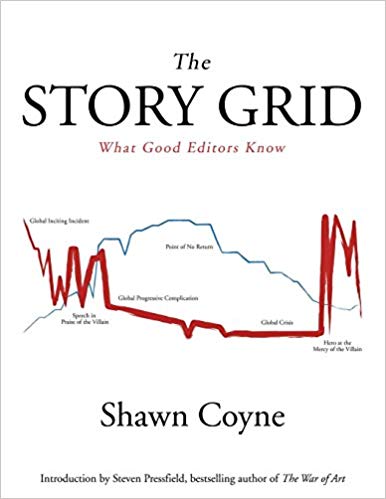
The conscious object of desire is the tangible thing that the protagonist wants and actively pursues from the Inciting incident of the Story forward.
Here’s Coyne’s synopsis of story…
It’s very useful to remember that the BEGINNING is all about HOOKING your reader…getting them so deeply curious and involved in the Story that there is no way they’ll abandon it until they know how it turns out. The MIDDLE is about BUILDING progressive complications that bring the stress and pressure down so hard on your lead character(s) that they are forced to take huge risks so that they can return to ”normal.” The ENDING is the big PAYOFF, when the promises you’ve made from your HOOK get satisfied in completely unique and unexpected ways.
STORY distilled is…HOOK, BUILD, PAYOFF. That’s it.
And it looks like from what Jesus told his disciples that he is into setup and payoff…
I am telling you this now, before it takes place, that when it does take place you may believe that I am he.
And now I have told you before it takes place, so that when it does take place you may believe.
Also, there’s the question of backstory and it’s power…
The use of backstory to turn story is the single most powerful technique in the execution of exposition.
It’s interesting to think of the old testament as backstory…
If the Christian story is brilliant in its use of set-up and pay-off, we must consider it as one grand tale from Genesis, the beginning of the old testament, through all the following old testament books, all the way to Revelation, the last book in the new testament, with Jesus as the pay-off. Here’s a few comments from those who believe it to be so…
Let me conclude with a bold, but sincere, claim: What I have tried to suggest is that it can be argued that the books of the OT are messianic in the full NT sense of the word. The OT is the light that points the way to the NT. The NT is not only to cast its light back on the Old, but more importantly, the light of the OT is to be cast on the New. The books of the OT were written as the embodiment of a real, messianic hope—a hope in a future miraculous work of God in sending a promised Redeemer. This was not an afterthought in the Hebrew Bible. This was not the work of final redactors.
I believe the messianic thrust of the OT was the whole reason the books of the Hebrew Bible were written. In other words, the Hebrew Bible was not written as the national literature of Israel. It probably also was not written to the nation of Israel as such. It was rather written, in my opinion, as the expression of the deep-seated messianic hope of a small group of faithful prophets and their followers.
And here’s a snippet from an interview with Phil Vischer, of the famous Veggie Tales…
Phil: The Old Testament is a story without an ending. That’s the Old Testament. It is a story that has no ending. The New Testament fulfills every promise of God that we find in the Old Testament.
The Bible—Fun?, Guest: Phil Vischer, FamilyLife Today® Radio Transcript, September 10, 2012
Here’s something about the famous Martin Luther…
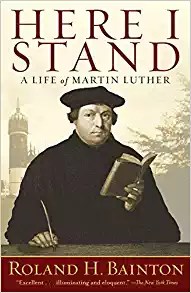
His first lectures were on the book of Psalms. We must bear in mind his method of reading the Psalms and the Old Testament as a whole. For him, as for his time, it was a Christian book foreshadowing the life and death of the Redeemer.
…Foreshadowing/ setup, same thing.
The Status of Humanity and the Betrayal in the Garden
There’s more to show you here in Stage 5, and to unfold it, let’s take a little tour back to our balance and inciting incident. The Christian story offers an interesting explanation for something we all wonder–What’s wrong with this world?…
One of our deepest questions about our world is “What went wrong?” We know the world is broken, but we wonder how that happened, and we want to fix it.
It doesn’t take much imagination to get into the emotions of this question, but if you want to get your despair juices flowing, check out two of my favorite songs …
“What’s wrong with this world?” is a question that is the basic starting place many of the world’s religions address…
What the world’s religions share is not so much a finish line as a starting point. And where they begin is with this simple observation: something is wrong with the world. In the Hopi language, the word Koyaanisqatsi tells us that life is out of balance. Shakespeare’s Hamlet tells us that there is something rotten not only in the state of Denmark but also in the state of human existence. Hindus say we are living in the kali yuga, the most degenerate age in cosmic history. Buddhists say that human existence is pockmarked by suffering. Jewish, Christian, and Islamic stories tell us that this life is not Eden; Zion, heaven, and Paradise lie out ahead.
Religious folk worldwide agree that something has gone awry. They part company, however, when it comes to stating just what has gone wrong, and they diverge sharply when they move from diagnosing the human problem to prescribing how to solve it.
And here’s Koukl again…
It is clear to most people that the world is not the way it ought to be. Something has gone terribly wrong, and everybody knows it.
And one of the most haunting questions that flows out of “What’s wrong with this world?” are questions of identity, “Who am I?” …
We have all forgotten what we really are. All that we call common sense and rationality and practicality and positivism only means that for certain dead levels of our life we forget that we have forgotten. All that we call spirit and art and ecstasy only means that for one awful instant we remember that we forget.
The Results of the Betrayal
In the Christian story, the balance answers that question, “Who am I?” profoundly. Human status was off the charts, making the magnitude of the disruption of our inciting incident betrayal astonishing.
Against this background, the familiar account in Genesis 3 of how the serpent deceives the woman and the man into disobeying God is highly significant. In the light of their royal status and their divine commission to rule over the animals, it is especially noteworthy that Adam and Eve obey the serpent’s instructions rather than those of God. By submitting to the serpent, Adam and Eve fail to exercise their God-given dominion over this crafty animal.
Adam and Eve’s disobedience to God is an act of the utmost treachery. On the one hand, they knowingly betray the Creator who had entrusted them with his authority to govern the earth. On the other hand, they give their allegiance to a cunning creature who challenges God’s authority with the deliberate intention of overturning his careful ordering of creation.
While the balance in the Christian story answers the question, “Who am I?” profoundly, the inciting incident in the Christian story profoundly answers the question, “What’s wrong with this world?”
Here’s a sobering short list exploring what was lost in our inciting incident disruption…
1. Loss of Status
As a result of the inciting incident, human status plummeted…
While the opening chapters of Genesis allude briefly to God’s blueprint for the earth, his plans are almost immediately overturned — for Adam and Eve betray their Creator and give their allegiance to his enemy. Expelled from God’s presence, they forfeit their unique status as viceroys of the divine king.
But the gut wrenching loss wasn’t only about being demoted from their viceroy status, it cut to the heart of their very relationship with God…
By obeying the serpent rather than God, Adam and Eve fail to maintain the sanctity of the temple-garden. Consequently, they are deprived of their priestly status and expelled from the sanctuary complex. No longer do they have immediate access to God; no longer do they live within the temple-garden. All importantly, their actions jeopardize the fulfillment of God’s blueprint that the whole earth should become a holy garden-city. The very ones meant to extend God’s dwelling place throughout the earth are excluded from his presence.
2. We are No Longer What We Once Were
It’s not an understatement to say that sin entering the world brought disruption felt at every level. We humans are no longer what we once were…
The human condition is worse than many realise. It is surely evident to anyone who takes Scripture seriously that the entry of sin into the world has brought about major change and disruption. The consequences of and the damage due to the loss of Paradise are to be felt at every level. Humans are no longer what they once were.
3. Death Unleashed
Just as God warned Adam, the betrayal in the garden unleashed layers and layers of death…
With the sin of the third chapter everything changes. The general context of blessing for the creation is altered by a curse on the ground (3:17). The man and woman are judged in ways that make begetting of progeny painful and their sustenance the fruit of harsh toil (3:16-19). Yahweh God’s warning about the certain consequences of disobedience (2:17) is fulfilled in a surprising number of ways, as the following narratives describe how death is unleashed upon humankind. While death at first glance is apparently postponed but not forgotten in the decree that humans will return to the dust (3:19), what is not explained there is just how death will come. The following texts provide a series of answers; death is everywhere. Some will experience a bloody end through fratricide and uncontrolled vengeance (4:8, 14, 23-24); others will live long but succumb to natural causes (the refrain “and he died” in 5:5, 8, 11, 14, 17, 20, 27, 31); the rest, except for Noah and his family, will drown by divine judgment through the flood because of the corruption and violence that had filled the earth (6:5-7, 11-12; chaps. 6-8); finally, God delegates the authority to punish by death (9:5-6). Clearly, there is no tree of life east of Eden.
4. All of Creation Groans
In fact, the result of the betrayal by Adam and Eve didn’t just affect humans. According to the bible, a result of the corruption entering the world is that even the creation itself is painfully groaning…
For the creation waits with eager longing for the revealing of the sons of God. For the creation was subjected to futility, not willingly, but because of him who subjected it, in hope that the creation itself will be set free from its bondage to corruption and obtain the freedom of the glory of the children of God. For we know that the whole creation has been groaning together in the pains of childbirth until now.
Status Genre
The first of that short list of loss from our inciting incident is about “status”. It’s a big deal in story, and I thought it would be helpful to introduce you to the question of Genre, specifically the Status Genre, which I believe sheds light on the core of how we humans were most affected by the inciting incident in the Christian story. If you want more of my thoughts on what Genre the Christian story is, you’ll find it here.
First, let’s turn to a helpful description to get acquainted with the Status Genre…
Status stories are about a change in social position. They’re driven by the nature of the protagonist’s inner conflict. Characters in a Status story WANT validation from others because they NEED esteem and self-respect. In short, their external object of desire is different from their internal need. …. [A] Status story arises from the need for esteem. The Status protagonist’s primary goal isn’t survival, safety, or love. It’s esteem, standing, third-party validation. A firm place in the social order.
SECRETS OF THE STATUS GENRE, by Rachelle Ramirez, Story Grid
So, look at this connection the status genre has with the balance in the story in the Bible…
Status is anchored in self-respect.
SECRETS OF THE STATUS GENRE, by Rachelle Ramirez, Story Grid
In the balance of the Christian story, the status of humans includes being Image Bearers, which includes a deep sense of self-respect.
Let’s look next at how the status story fits with what happened in the inciting incident in the Christian story. An inciting incident challenges the human protagonists’ status quo ….
A Status story isn’t going to be incited by a deadly tornado, but by a threat to the protagonist’s position.
SECRETS OF THE STATUS GENRE, by Rachelle Ramirez, Story Grid
Here’s a refresher on how the need and desire to restore the balance is a basic part of story…
But let me try to answer that question by making a simple and clear definition of story itself. Story begins when an event, either by human decision or accident in the universe, radically upsets the balance of forces in the protagonist’s life, arousing in that character the need to restore the balance of life. To do so, that character will conceive of what is known as an “Object of Desire,” that which they feel they need to put life back into balance. They will then go off into their world, into themselves, in the various dimensions of their existence, seeking that Object of Desire, trying to restore the balance of life, and they will struggle against forces of antagonism that will come from their own inner natures as human beings, their relationships with other human beings, their personal and/or social life, and the physical environment itself. They may or may not achieve that Object of Desire; they may or may not finally be able to restore their life to a satisfying balance.
If an event were to throw your life out of balance, what would you want? What would any human being want? Sovereignty over existence. By throwing life out of balance, the inciting incident arouses the natural human desire to regain control and restore balance.
Regaining control and restoring balance plays into a universal desire for status…
Decades of research have shown that we’re all deeply affected by status. …. We can all relate to a Status story because status-seeking is in our basic nature, in our biology as social animals.
SECRETS OF THE STATUS GENRE, by Rachelle Ramirez, Story Grid
And let’s visit the great novelist Tom Wolfe, who understands the status genre so well…
Nevertheless, both the exultation and the depression were real emotions, curious emotions, on the face of it, entirely aroused by status concerns. The surprising insinuations of status concerns into every area of life must be understood if one is to understand the nature of the human beast.
Tom Wolfe, The Human Beast, Jefferson Lecture, National Endowment for the Humanities, May/June 2006
That a wound to one’s status, not to one’s body, not to one’s bank account, not to one’s general fortunes in life, that such a wound to one’s status could have such a severe effect upon the psyche of the human beast, is no minor matter. It means that we have come upon a form of anguish that is somehow primal. Even the most trivial and the most unlikely circumstances can be colored by the beast’s constant and unrelenting concern for his own status. Which is to stay, his own standing, his own rank, in the eyes of others and in his own eyes.
….
I kept coming upon situations in which I thought surely other emotions would rule, love, if not love, passion, or if not passion, at least lust. Instead, as elsewhere, status ruled.
Tom Wolfe, The Human Beast, Jefferson Lecture, National Endowment for the Humanities, May/June 2006
Here’s a thought to whet your appetite for the coming stage 7, because the issue of status runs from the inciting incident through to the climax of the Christian story…
Central to the redemptive activity of God is the cross of Christ, for through it Satan is defeated and human beings are enabled to regain the holy, royal status Adam and Eve lost.
I feel the loss of the Christian story’s inciting incident when I ran across this scripture by a Psalmist…
The heavens are the Lord’s heavens, but the earth he has given to the children of man.
First Action–Scarcity
There’s much more to the First Action taken by the Christian God, but I’d like to highlight one more– a painful reality we all experience–Scarcity…
Let’s revisit the passage just after the betrayal and see how God responded here in Genesis Chapter 3…
To the woman he said,
“I will surely multiply your pain in childbearing;
in pain you shall bring forth children.
Your desire shall be contrary to your husband,
but he shall rule over you.”And to Adam he said,
“Because you have listened to the voice of your wife
and have eaten of the tree
of which I commanded you,
‘You shall not eat of it,’
cursed is the ground because of you;
in pain you shall eat of it all the days of your life;
thorns and thistles it shall bring forth for you;
and you shall eat the plants of the field.
By the sweat of your face
you shall eat bread,
till you return to the ground,
for out of it you were taken;
for you are dust,
and to dust you shall return.”The man called his wife’s name Eve, because she was the mother of all living. And the Lord God made for Adam and for his wife garments of skins and clothed them.
Then the Lord God said, “Behold, the man has become like one of us in knowing good and evil. Now, lest he reach out his hand and take also of the tree of life and eat, and live forever—” therefore the Lord God sent him out from the garden of Eden to work the ground from which he was taken. He drove out the man, and at the east of the garden of Eden he placed the cherubim and a flaming sword that turned every way to guard the way to the tree of life.
Genesis Chapter 3
See what he says to Adam there? Increased work…thorns and thistles…lots of time spent just to get the food they need. In other words–scarcity on every level.
So, it appears the impact of the inciting incident fits with Robert McKee’s description of our human situation…
As Jean-Paul Sartre expressed it, the essence of reality is scarcity, a universal and eternal lacking. There isn’t enough of anything in this world to go around. Not enough food, not enough love, not enough justice, and never enough time. Time, as Heidegger observed, is the basic category of existence. We live in its ever-shrinking shadow, and if we are to achieve anything in our brief being that lets us die without feeling we’ve wasted our time, we will have to go into heady conflict with the forces of scarcity that deny our desires.
The Christian God is brilliant, creating scarcity, a powerful creative force in storytelling…
The creative force that rouses powerful storytelling is, as Jean-Paul Sartre taught, scarcity. There simply isn’t enough of anything in this world to go around: not enough food; nor enough love, and never enough time. To satisfy human needs from their most basic to their most dream-filled, we must battle paucities that deny our yearnings. In short, the essence of reality is humanity’s ongoing strivings against negation.
I love the following quote because it visits the balance in the Christian story first, when everything is going according to the Christian God’s design. But boy did the inciting incident ever give them a drastic dose of Scarcity.…
When God created man, his design was that man till the soil as an extension of God’s hand to carry on the work which God had made (Gen 2:4–7). Man’s purpose, then, was to work upon the earth, an earth which yielded readily to the hands of Adam to produce only those things which “were pleasing to the eye and good for food” (cf. Gen 2:9). But the curse of God came upon man and his environment because of Adam’s rebellion. It changed the scene drastically so that no longer would man’s work be pleasureable. Instead it is characterized by laboriousness and pain and yields a meagerly disproportionate return for the energy expended (Gen 3:17–19). Thorns and thistles grow where once beautiful and luscious produce sprang forth. Man was made to eke out a living under adverse conditions. His whole life became involved with this effort.
And this is a scarcity which remains to this day…
I believe that, at a fundamental level, American desires for the “good life” are basic and ordinary. That is not to say that everyone has the same standards of adjudicating quality of life, but that when many people say “prosperity,” they mean survival. People long for the necessities that sustain life and rejoice when those goods overflow.
Make no mistake, we don’t just feel the effects of the Christian story’s inciting incident in gardening, or farming to produce food. According to the Christians, it effects all, even to the point where this scarcity touches the deepest levels, as McKee says–, something near and dear to my heart–there’s not enough meaning to go around in this universe…
Herein then is the task or burden which God has laid upon the sons of Adam: the search for meaning in a disjointed and topsy-turvy world. It is not a burden because man is a creature who has only limited and derived knowledge. It is a heavy and frustrating burden because man’s quest for meaning is now performed in a cursed world wherein inexplicable paradox dominates—there is birth and death, hate as well as love, and more war than peace fills the earth.
The Christian God’s first action affects all of humanity, rebel and remnant alike…
The curse has created a world where rebel and remnant alike experience both birth and death, love and hate, peace and war (3:2, 8).
That’s it for Stage Five…

