Hector Klumpp here, bewildered after my ill advised agreement to do this big project of evaluating the Christian story through McKee’s eight stages of story, the obvious next question for me became – Where is the best place to find the Christians version of their story?
That’s a big question for someone like me, who knows almost nothing about it…So, how could I find my way?
I could ask a Christian, but the only Christian I know is Michelle, and she just converted. I’ll keep her in mind in a pinch.
So, I decided to never mind what I didn’t know..I’ll start with what I did know– Wikipedia. And the experience was both enlightening and somewhat frustrating.
On the one hand, I learned Christianity is the world’s largest religion.
That means my conception of Christianity as a primarily Western religion is totally false. If anything, it’s now African and Asian.
To my point, this, about the African nation of Ghana, is interesting…
Billboards advertising Christian meetings dot the streets, businesses and shops are named after religious figures and phrases, and pastors can be spotted giving sermons on avenues and aboard commuter buses. Streets, homes, and offices display colorful posters of Jesus, saints, and religious leaders.
Megachurches are as much social hubs as they are spiritual centers with popular pastors often gaining a celebrity status. Church isn’t just for weekends, either. Many people will attend services most weeknights, Reuters reports, and carry their Bibles around with them during the day.
Christianity first arrived on the shores of the West African country in the late 15th century by way of European explorers, colonizers, and missionaries. It slowly seeped into the culture, spreading steadily across the centuries.
Today about 71 percent of Ghana’s roughly 26 million people are Christian. A 2012 survey also found an overwhelming 96 percent of Ghanaians identify as religious, making it the most religious population in the world.
But in Africa, Ghana is far from alone: About 41 percent of the world’s 560 million Protestants live on the continent, Reuters reports, and that number could rise to 53 percent by 2050. Amid this wave of concentrated faith, West Africa is really at the heart of global Christianity.
The Beauty of Ghana’s Fervent Faith, by Kelly Gonsalves, The Week, April 16, 2017
Interesting, but not helpful in my quest. Then, I found this in the Wikipedia article titled “Christianity,”
The foundations of Christian theology are expressed in ecumenical creeds.
Okay, I thought. I’ll start there and I began to look at the creeds to find the
Christian story.
Turns out the term “creed” comes from a Latin word
meaning “I believe.”
Here’s an English translation of what seems to be
their most popular creed, one called The Apostles Creed…
I believe in God,
the Father almighty,
Creator of heaven and earth,
and in Jesus Christ, his only Son, our Lord,
who was conceived by the Holy Spirit,
born of the Virgin Mary,
suffered under Pontius Pilate,
was crucified, died and was buried;
he descended into hell;
on the third day he rose again from the dead;
he ascended into heaven,
and is seated at the right hand of God the Father almighty;
from there he will come to judge the living and the dead.
I believe in the Holy Spirit,
the holy catholic Church,
the communion of saints,
the forgiveness of sins,
the resurrection of the body,
and life everlasting. Amen.
Interestingly, if you look at The Apostles Creed through the simple lens of story structure, you can see a beginning, middle, and end to the story.
By the way, The Apostles Creed is distinct from Apollo’s Creed, which begins with the affirmation, “Yo, Adrian!”
But, back to the Apostles Creed, maybe I was onto something…
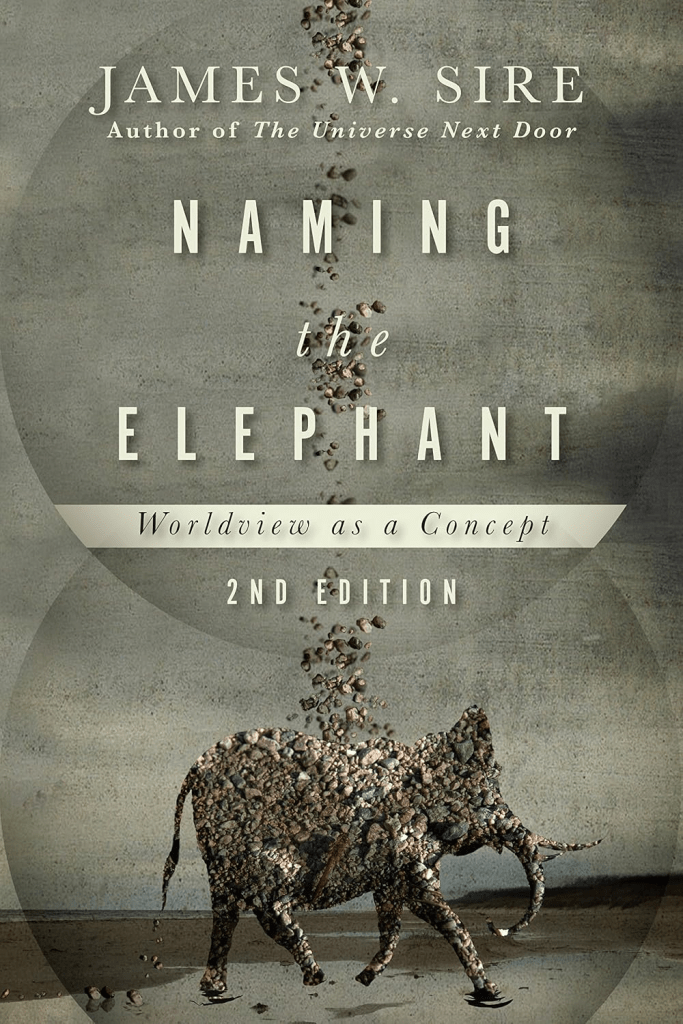
I have argued that the Christian worldview begins with ontology – an abstract concept, but soon ontology becomes lodged in story form. The ancient Apostles Creed demonstrates this… Only the first line is utterly ontological. The second line brings in action and while it does not take a position on whether creation was in or out of time, it recognizes God as origin of the earth. It is in the fourth line that roots the Christian worldview in story…. The remainder of the creed is steeped in story.
….
When one turns to the Bible itself, the ground of all Christian theologies – Protestant, Catholic, Orthodox – the element of story is even stronger. Most of the Bible is story, and all of it is embedded in story – a history, a story of events that really happened (not just-so stories, or likely stories, or myths).
James Sire, Naming the Elephant
When I read the first part of that quote I was elated. This Sire guy says that the Creed is steeped in story. But wait, next we have this Sire guy turning his attention immediately to the Bible. So this is where my attention turned as well, for when it came to the content of the Christian story, most Christians, like my friend Michelle, depended on the Bible, which is known as the Christian “scriptures.”
If this James Sire guy is right, that’s where I’ll find the Christian story.
But, just as that first night when I unwisely agreed to do this research and eyed Michelle’s bible with a sick feeling to my stomach, I wondered how was I to sort through this mish-mosh called the bible to find the story?
These feelings intensified when I uncovered this from a book titled The Complete Literary Guide to the Bible…
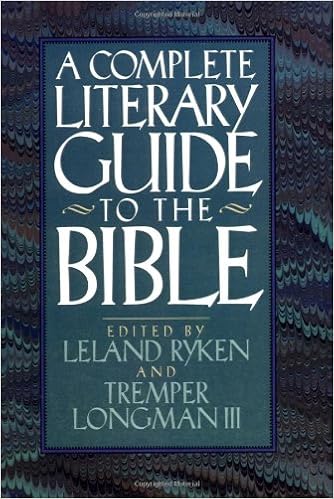
The literary feature of the Bible that is perhaps most noticeable is the heterogeneous nature of the material. Judged by classical standards of unity, the Bible is an untidy patchwork of diverse material. Nonliterary material like genealogies, historical notes, commands, and travel itineraries is mingled with literary material. Poetry appears right in the middle of expository and narrative prose. As we read the stories of the Bible, we seem always to be interrupted by extraneous documentary or didactic material. Narrative and discourse jostle for supremacy in the Gospels. Nearly every book in the Bible exhibits a mixed-genre format in a degree unparalleled in other literature.
The Complete Literary Guide to the Bible, By Leland Ryken, Tremper Longman III
I knew I was in over my head as discouragement swarmed over me like a hive of hornets. I had tried in my early 20’s to skim the Bible, and that
description was just what it seemed to me – a jumble of literary odds and ends.
How was I ever going to get a clear story out of odd ends?
Well, lucky for me, this Ryken guy don’t stop there. Next he does an about-face…
The Bible is also an amazingly unified book. The most obvious element of literary unity is narrative unity. The Bible tells a story with a beginning (the creation of the world), a middle (fallen human history), and an end (the consummation of history with the eternal defeat of evil and the triumph of good).
See that?
A beginning, middle, and end!
Now I was beginning to breath a little easier, and the oxygen in the room continued to increase when I found this…
The Bible is not a mere jumble of history, poetry, and lessons in morality and theology, comforting promises, guiding principles and commands; instead, it is fundamentally coherent. Every part of the Bible — each event, book, character, command, prophecy and poem — must be understood in the context of the one story line.
Craig Bartholomew and Michael Goheen, The Drama of Scripture
Now they are starting to speak my language.
Here’s the Christians claiming that their “faith” is “one grand narrative”…
At the heart of our faith is the bold claim that in a world full of stories, with a world’s worth of heroes, villains, comedies, tragedies, twists of fate, and surprise endings, there is really only one story. One grand narrative subsumes and encompasses all the other comings and goings of every creature—real or fictitious—on the earth.
Mike Cosper, The Stories We Tell: How TV and Movies Long For and Echo the Truth
Maybe this project isn’t so insane after all.
And where do I find this one grand narrative?
The Bible gives us the framework within which we can start to imagine Christianly, not just winging it vaguely taking off in flights of fancy, but living within the great story. I hope when you read the Bible that you are aware that it is a single great enormous story, a great epic running from that original creation in the garden to the final New Creation when God brings earth and heaven together finally and forever — with the climax of that story being Jesus dying on the cross and rising again as we were just singing. And then the work of implementing that achievement being given to us.
The Bible and Christian Imagination, N.T. Wright, Response, Summer 2005
Well, according to this N.T. Wright guy, just as Michelle insinuated on that fateful night that I agreed to do this project, I don’t have to look any further to find the “single great enormous story” of Christianity than the bible.
But, let’s stay real. No matter what the Christians say, it’s still rather complicated. What would McKee say about this idea of evaluating the story in the Bible through his eight stages of story?
Check out this interview with the London Real about the nature of the story in the Bible:
LR: So, is this an unheard of time in human history, when it comes
to this long-form…?
McKee: I think so.
LR: We’ve never written or even told orally told stories…
McKee: Nobody’s ever attempted that kind of magnitude before.
LR: Is the Bible compared to say, a Breaking Bad?
McKee: No. No. The Bible is a bunch of little short stories.
And there’s no true line. It keeps changing authors every twenty pages or
so.
CHARACTER EVOLUTION IS ESSENTIAL TO GOOD
STORYTELLING, Robert McKee on London Real, May 24, 2017
I’ve fallen back into discouragement, and was thinking of giving up the project whenI read more from this Ryken guy…
If we ask what kind of book the Bible is, the answer is that it is an anthology – a collection of diverse works written by separate authors. We can make immediate literary sense of the Bible if we think of its external form (though not its content and worldview) as being similar to an anthology of English or American literature. The very name Bible (Greek biblia) tells us that the Bible is an anthology, inasmuch as the word means “little books.” An anthology of “little books” can appropriately be thought of as a small library.
An anthology implies multiple authorship, and the individual books in the Bible were written by at least three dozen authors.
Leland Ryken, Literary Introductions to the Books of the Bible
I thought it might come to this…time to turn for help to the only Christian I know…my friend Michelle. When I showed her Ryken and McKee’s quote, she just laughed.
“Ever since that night you decided to take this on, I’ve been looking into this too, Hector. These perspectives are not the last word on this. Here’s more from the very same Ryken guy.”
And she showed me this…
Overall, we can say that the Bible has a narrative unity, even though it includes many nonnarrative parts. The essence of a story is that it is a sequence of events having a beginning, a middle, and an end. The beginning of the Bible’s story is literally the beginning – God’s creation of the world as narrated in Genesis 1-2. The end of the story is literally the end – the end of human history as narrated in the book of Revelation. The middle is the story of human history as it unfolds under the providential and redemptive oversight of God.
Leland Ryken, Literary Introductions to the Books of the Bible
“Yeah, this Ryken guy sure understands the complexities. But I’m still in a fog, Michelle. Is there anyone else commenting on this?” I ask.
“Yes,” she says, “try this one on for size”…
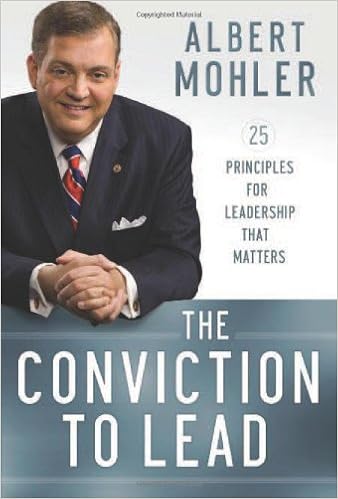
The Bible is not just a book of stories. It reveals one grand narrative from beginning to end. Borrowing from literary scholars, many Christians now speak of the Bible’s metanarrative – its all-encompassing story line. In the Bible, God has revealed the story that underlies every true story, and in which every other true story finds its meaning.
That is the story of God’s determination to glorify himself by saving sinners through the atonement accomplished by his own Son. As Christ himself made clear, every word of Scripture serves to tell this story.
Albert Mohler, The Conviction to Lead
“Whew,” I comment. “Every word of scripture serves to tell this story? That’s quite a claim.”
She smiles. “I have more”…
When we hold the Bible in our hands, we aren’t holding an anthology or a bundle of scattered and miscellaneous thoughts. We’re holding one comprehensive, cohesive volume with a logical beginning and ending, telling us one story centered around one Person – Jesus Christ.
It’s as though a Master Author was behind it all, which there was.
David Jeremiah, Journey
“Okay,” I say, “though I can’t embrace a ‘Master Author’, I sense now that we’re back on solid ground: a story with a beginning, and an ending, and centered around one protagonist.”
“I know how you like Tolkien. Look at this assessment from the famed British writer”…
I would venture to say that approaching the Christian Story from this direction, it has long been my feeling ( a joyous feeling) that God redeemed the corrupt making-creatures, men, in a way fitting to this aspect, as to others, of their strange nature. The Gospels contain a fairy-story, or a story of a larger kind which embraces all the essence of fairy-stories. They contain many marvels – peculiarly artistic, beautiful, and moving: ‘mythical’ in their perfect self-contained significance; and at the same time powerfully symbolic and allegorical; and among the marvels is the greatest and most complete conceivable eucatastrophe. The Birth of Christ is the eucatastrophe of Man’s history. The Resurrection is the eucatastrophe of the story of the Incarnation. This story begins and ends in joy.
“On Fairy-Stories,” by J.R.R. Tolkien
“Yeah, he’s brilliant,” I say. “It’s not just anyone that can make up a word that becomes part of our language and is actually used by others besides himself.”
“I’ve got more, if you’re up for it,” she says.
“I better be, if you went to the trouble to find these things for me”…
It need hardly be stressed that the Bible is a story, the grandest of stories with countless smaller stories within it. Like all stories, it has a beginning and an end and therefore depends on development and on continuity.
Os Guinness, Impossible People
More broadly, the Bible’s many books and numerous literary genres are all set within a detailed storyline that must be deeply absorbed.
Can There Be a Christian University? By D. A. Carson, Southern Baptist Journal of Theology, Fall 1997
I went home and began to reread the Bible. In the light of these realizations, I understood it in a new way. This great story each life was telling, this story of the spirit all flesh was telling: here it was, beginning, middle, and end. The Bible was the story God wanted to tell us about himself – about himself and us.
Andrew Klavan, The Great Good Thing
“Thanks, Michelle…there it is again: Beginning, Middle, and End,” I say.
“It gets pretty intense, Hector. Some Christians believe every number, every word of the bible is designed by God and is there for a specific reason”…
First, although the Bible consists of sixty-six separate books penned by over forty authors over a period of several thousand years, it is an integrated message system. Every passage, every word, every number, and every place name is there for a specific reason. A skillful design pervades the whole.
Chuck Missler, Learn the Bible in 24 Hours
“Well,” I say, “That fits with God being the protagonist/author of the story.”
“And people of faith say that God, the protagonist, wrote the bible as one big, big story”…
Although the Bible consists of a wide variety of historical narratives (stories spanning generations) and many other types of literature (laws, poetry, lyrics, prophecies, letters, etc.), many don’t realize that, at its core, the Bible is one, greater unfolding story with a beginning, a middle, and an end.
You Are Here: Finding Your Story in God’s Story, by Steve Childers, Pathway Learning, January 29, 2014
The Bible is a rich collection of songs and letters, stories and prophecies—all forged in the crucible where people’s lives meet God’s Spirit. At its core, Scripture is a great drama, highlighting God’s battle to win back his rebellious children, overcome evil, and restore life and wholeness to our world.
How to Save the Bible, by Glenn Paauw, QIdeas
“Okay, Okay,” I say. “I get your point. It looks like I’ll be looking to the bible to find out what the Christian story actually is.”
“Yeah, well…you know what I believe. But I can’t see you meeting this guy’s requirement, ha, ha!”
The biblical drama requires the presence of the Lord God as the leading actor in its story line. Yet the Bible also requires that we acknowledge God as the scriptwriter, director, and producer of this grand drama.
Veiled Glory: God’s Self-Revelation in Human Likeness—A Biblical Theology of God’s Anthropomorphic Self-Disclosure, By A. B. Caneday, in BEYOND THE BOUNDS: Open Theism and the Undermining of Biblical Christianity, EDITED BY JOHN PIPER, JUSTIN TAYLOR, PAUL KJOSS HELSETH
“Ha, ha, no thank you. I don’t have any plans to fulfill their ‘requirement’ to acknowledge God,” I say.
“Hector, I only have two more I’d like to show you,” Michelle says sheepishly. “One is from a guy I’ve been reading a lot lately named Peter Kreeft. He’s very thoughtful and I really think he will be helpful to you in your quest to find the Christian story in the bible”…

Another parallel is our conceiving characters in a story. We do that because we are made in God’s image and God does that. We are his characters and history is his-story. The difference is that we are not quite so creative as to give our characters life outside our minds. He is.
Peter Kreeft, Fundamentals of the Faith: Essays in Christian Apologetics
“We are characters is his-story, what a thought,” I say. “Thank you for introducing me.”
Then she says, smiling her winning smile, “Okay, just one more, my patient friend. This is saying the story is God’s. He is the author, the protagonist, and even sees the future.”
We have a direct line to the One who knows what happens on the next page because He has written the whole story.
David Jeremiah, Living With Confidence in a Chaotic World
“Yeah, right. This, of course, is hard for someone like me to believe. But I promise you, Michelle, I will look into it.”
“That all we asked you to do, Hector. Nothing more…”
And that, dear reader is how I came to land on the bible as the best place to find the Christian story.


Leave a Reply